





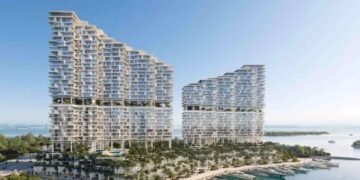





















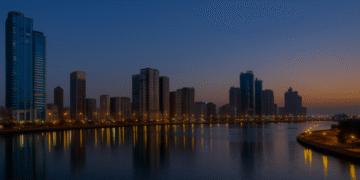
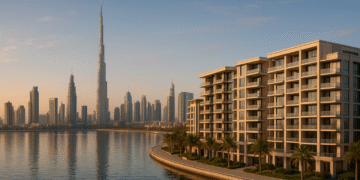
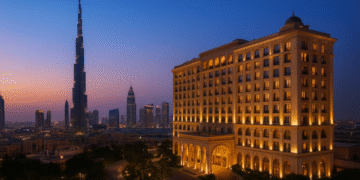
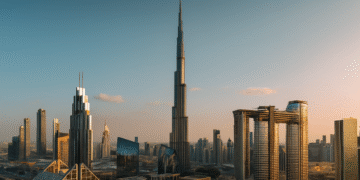


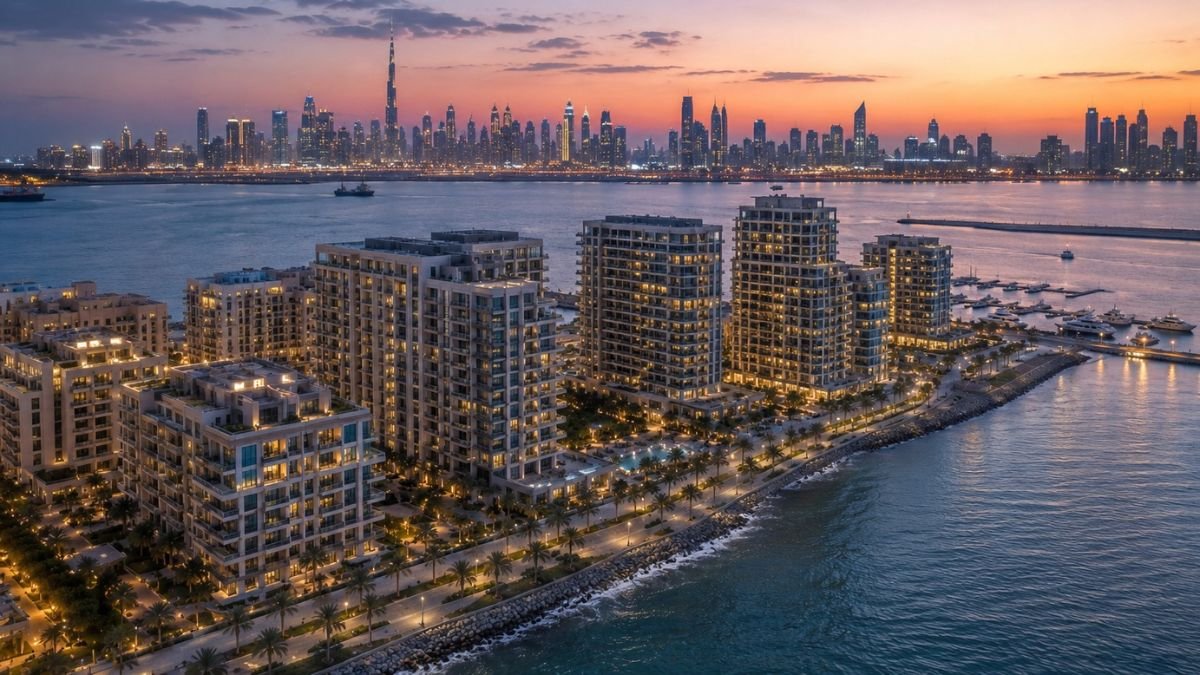
Dubai, UAE — Dubai’s newest luxury experiment is a home with a football club attached, and buyers are paying for the badge. DAMAC Properties has released the sixth and final tower of Chelsea Residences by DAMAC at Dubai Maritime City after selling out the first five.
The sell-out turns Dubai football-branded residences from a marketing novelty into a working test of how far brand equity can travel into property prices.
A branded residence is a home sold under, and serviced by, a consumer brand that lends its name, design and amenities in return for a fee and a premium. Historically that brand was a hotel such as Four Seasons or Bulgari; now it is as likely to be a fashion house or a sports club.
DAMAC, which calls the Chelsea project the world’s first football-branded residence, prices one to three-bedroom apartments from AED2.56 million. Entry units are reported at around $697,000 for 827 square feet.
What The Data Shows
The wider category is expanding, but with more discipline than a decade ago. Knight Frank’s Residence Report tracked more than 1,000 live and pipeline branded schemes across 83 countries.
The Middle East accounts for roughly 27 percent of that global pipeline, the report found. Dubai alone recorded $8.2 billion in sales of homes priced above $10 million in the year to June 2025, the highest figure of any city.
Sports branding is the newest layer on that base. In Abu Dhabi, Manchester City has agreed with Ohana Development to build Manchester City Yas Residences, which the developer calls the world’s first club-branded residential project, spanning 1.67 million square metres along the Yas Canal. Pricing and timelines have not been disclosed.
What Does A Football Badge Actually Buy?
For buyers, the appeal is a bundle: a recognised global brand, a waterfront address and amenities built around the theme. Chelsea Residences offers what DAMAC bills as the UAE’s only rooftop football pitch, a blue-sand beach in the club’s colours and an Athlete Training Centre.
The proposition is that a football club can do for a residential tower what a hotel brand has long done: stand in for quality and justify a premium. Whether that premium holds is the harder question.
Andrew Cummings, head of residential agency at Savills Middle East, has noted that most Dubai buyers are now end users or long-term investors rather than quick flippers, and that the market rewards projects “built to last, not just to launch.” Will McKintosh of Knight Frank’s MENA team frames the UAE as “an outperformer” in global luxury residential, but one where investors are turning more selective about genuine differentiation.
Where Dubai Football-Branded Residences Fit In The Cycle
The sell-out lands as Dubai’s broader market cools from record volumes into a slower, more selective phase. Branded stock is one of the segments holding up.
Part of the reason is the buyer. Branded projects target people less sensitive to interest rates and mortgage caps and more focused on lifestyle, scarcity and a name they trust.
A football badge extends that logic to a fan base that is global, emotionally attached and, in the Gulf, often already spending on the club. That is a wider and more loyal pool than a hotel brand reaches.
The Risk Beneath The Brand
The caution is that sports-branded residences are unproven in the market that matters most for investors: resale. A developer sets the launch premium; the secondary market decides whether it survives.
Club-branded homes also carry reputational exposure a hotel does not. Ownership changes, on-pitch results and off-pitch controversy can all dull a badge’s shine over a multi-year hold.
Concentration compounds the point. Chelsea Residences is a single off-plan community in one district, with buyers paying today for homes still to be delivered.
What Would Confirm The Trend
The clearest read will come from resale listings on the earlier sold-out towers, and from the premium DAMAC’s branded units command over comparable non-branded stock at Dubai Maritime City.
The other test is Abu Dhabi. Whether Manchester City’s project prices above or below Chelsea’s range, and whether more club deals follow, will show if this is a category or a one-off.
A quiet secondary market would suggest the badge sells the first owner, not the second.
What The Source Material Leaves Open
DAMAC has not published the licensing terms with Chelsea FC, the handover date for the final tower, service charges, or any resale conditions tied to the brand. Those are the details that decide whether the premium is durable.
Nor has DAMAC disclosed how much of the price is the apartment and how much the badge. In Abu Dhabi, the Manchester City project’s pricing and delivery schedule remain undisclosed.
For Indian Buyers, A Sharper Trade-Off
For Indian and NRI buyers, the calculus is familiar but sharper here. The dirham’s peg to the dollar removes currency guesswork on the way in.
At AED2.56 million the Chelsea entry point also sits just above the AED2 million property threshold that, under current rules, qualifies a buyer for the UAE’s 10-year Golden Visa, pairing a lifestyle asset with residency.
That is the draw. The trade-off is liquidity, because a themed, premium-priced home may take longer to exit than a plain apartment in an established district. For a fan buying with the heart, that is a feature; for an investor buying with a spreadsheet, it is the line item to price in.
Discover more from Invest Dubai Today - Dubai Realty Insights
Subscribe to get the latest posts sent to your email.