






























Dubai, UAE — For most international buyers, the instinct is to chase the name. Downtown, the Palm, a Burj Khalifa view — the addresses that make the brochure. But if you are buying for rental income rather than a trophy, the 2026 numbers point almost everywhere else.
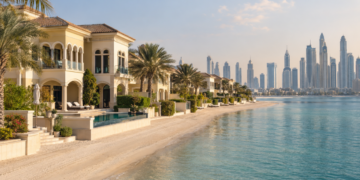
We mapped gross rental yields across 12 Dubai districts, and one pattern stood out: the more prestigious the postcode, the lower the return. Dubai’s two most recognisable addresses, Downtown and Palm Jumeirah, sit at the bottom of the table at around 5–6% gross. The strongest yields are in well-connected mid-market districts and the more affordable suburbs.
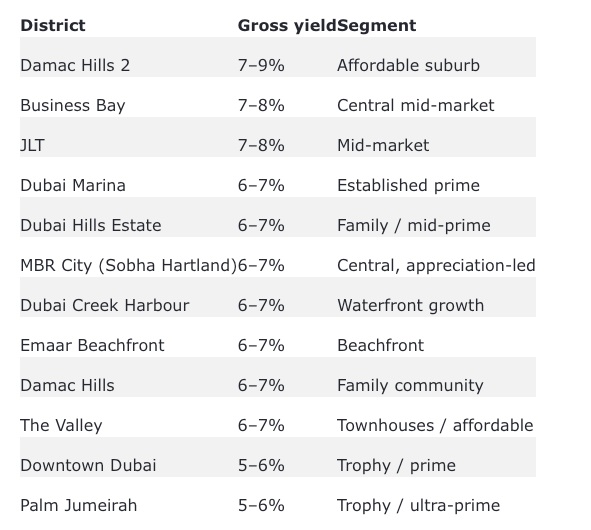
Figures are indicative gross yields on long-term leases. Short-term holiday-let returns can run materially higher, particularly on the Palm and in Marina.
Why the gap exists
The explanation is simpler than it looks. Through Dubai’s 2021–2024 boom, capital values in the prime districts ran ahead of rents. Buyers paid up for scarcity and prestige, and rents, while strong, could not keep pace with those headline prices. Yield is just rent divided by price, so when price climbs faster than rent, yield falls. The trophy areas inflated hardest, so they compressed hardest.
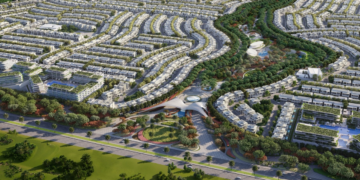
The mid-market tells the opposite story. In districts like Business Bay and JLT, or affordable family communities such as Damac Hills 2 and The Valley, entry prices stayed reasonable while tenant demand from professionals, families and a steady inflow of new residents kept rents firm. The result is yields of 7% and up, in places approaching 9%.
Why it matters in 2026
This is more relevant now because the market has changed character. After years of rapid growth, 2026 is more balanced: price growth is moderating, supply is catching up in places, and buyers can negotiate in a way they could not at the peak. In that environment the easy capital gains of the boom are less reliable, and rental income does more of the work in a total-return calculation. A dependable 7% yield held over several years is a steadier return than betting on another double-digit price run in an already-expensive prime tower.
None of this makes the trophy districts bad investments. They stay liquid, prestigious and strong on long-run capital appreciation, which is exactly what many of their buyers want. But an investor whose first priority is cash flow should be honest about the trade-off. In Dubai, prestige and yield mostly pull in opposite directions.
The numbers behind the numbers
Two things make even Dubai’s lower yields competitive globally. The first is tax: there is no annual property tax, no income tax on rent and no capital-gains tax in the UAE, so gross and net yields sit much closer together than they would in London, Singapore or most of India. The second is cost certainty — transaction costs are predictable at roughly 6–7% of the purchase price all-in, most of it the Dubai Land Department’s 4% transfer fee. Account for both, and a 7% Dubai gross yield often beats a nominally similar figure elsewhere once you get to net.
For an income-focused buyer, the practical takeaway is to judge a specific building on its net yield, not a district on its reputation. And in 2026, the maths is quietly working best in the well-connected mid-market, not at the top of the price list. As prime values ran ahead of rents through the boom, the gap widened; in today’s more balanced market, the yield-focused money is moving down-market, not up.
Dzhambulat Tkhazaplizhev is Managing Director of Worldwise Real Estate, which advises international investors on the Dubai property market. The district yield data above is from Worldwise’s 2026 analysis and is available on request.
Discover more from Invest Dubai Today - Dubai Realty Insights
Subscribe to get the latest posts sent to your email.