






























Dubai, UAE — Dubai Residential REIT has agreed to buy 220 townhouses at Jebel Ali Village for AED894 million, deepening the largest listed pool of rental homes in the Gulf just as the resale market cools. The deal matters because it shows institutional money still buying Dubai residential stock for the rent it produces, not the flip, at a moment when individual sellers are cutting asking prices.
The purchase, announced on 30 June, was struck through a forward purchase agreement, meaning the REIT locked in a fixed price for homes it will lease rather than resell. For anyone weighing Dubai property as an income play, it is a useful read on where patient capital is going.
What The AED894 Million Deal Includes
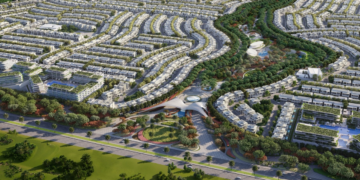
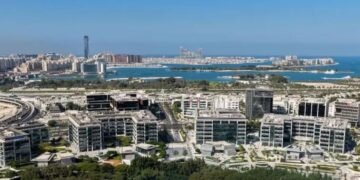
The cluster sits inside the wider Jebel Ali Village community and comprises 80 three-bedroom and 140 four-bedroom townhouses, close to Sheikh Zayed Road and Ibn Battuta Mall, according to the company. Together with 56 units the REIT bought earlier this year at the neighbouring Garden View Villas, the two acquisitions are projected to add roughly AED75 million in annual revenue once the homes are stabilised and leased.
That takes the total added to the portfolio in the first half of 2026 to 276 units. Ahmed Al Suwaidi, Managing Director of DHAM REIT Management, said the additions reflect “disciplined execution against the pipeline outlined at the time of listing” and described the focus ahead as “disciplined leasing” and turning the homes into “sustainable cash generation.”
Why The Dubai Residential REIT Deal Matters As Sales Soften
The context gives the deal weight. Reporting through June pointed to a Dubai resale market losing momentum, with some sellers accepting discounts after two years of fast price growth. Against that backdrop, a large REIT paying AED894 million for family homes it intends to rent out is a vote for recurring income over capital gains.
The behaviour separates two very different buyers. Speculative demand chases price appreciation and thins out when prices wobble. Rental-focused institutions such as Dubai Residential REIT underwrite a property on the cash it produces over years, so a softer sales market can improve their entry maths. The 220 townhouses target end-user tenants, the part of demand that tends to hold up when investor sentiment turns cautious.
What Does A Listed REIT Offer Buyers Who Cannot Afford A Villa?
A real estate investment trust is a stock-exchange-listed fund that owns income-producing property and passes most of its rental profit back to shareholders. It lets an investor own a slice of a large rental portfolio for the price of a share rather than the price of a home.
Dubai Residential REIT, which the company describes as the GCC’s largest such trust, trades on the Dubai Financial Market under the ticker DUBAIRESI. It says its portfolio spans 22 communities and more than 35,900 homes housing over 140,000 residents across premium, community, affordable and corporate housing. It listed in May 2025, when parent Dubai Holding sold 15 percent at AED1.1 per share in an offering that was 26 times oversubscribed, raised AED2.15 billion and valued the trust at close to four billion dollars.
For income, the structure is the point. Unitholders approved a AED550 million payout for the second half of 2025, and the REIT intends to distribute at least 80 percent of its profit twice a year. Shares were changing hands at about AED1.26, up only marginally in 2026, so the case here rests on the distribution rather than a rising price.
Where This Sits In Dubai’s Cycle
Dubai’s rental market has been the quieter strength beneath the headline sales numbers, with steady tenant demand supporting yields even as transaction values swing. A build-to-rent expansion by a state-linked landlord fits that pattern and gives the market a large, disclosed buyer of completed family homes. Concentrating in family-oriented, end-user areas near the Sheikh Zayed Road corridor is a defensive choice, favouring durable rent over the sharper cycles of investor-heavy apartment districts.
The Return Math Investors Cannot Yet Check
The announcement leaves the most important number unstated. The REIT did not disclose the net initial yield or capitalisation rate implied by the AED894 million price, so the actual return on the deal cannot be verified from the release. The AED75 million revenue figure is combined across two acquisitions and described as gross and post-stabilisation, not net income, and no per-unit price or occupancy assumption was given.
There are structural caveats too. The trust buys much of its stock from the Dubai Holding pipeline, so pricing sits within a related-party relationship rather than open-market bidding. Leasing 220 homes takes time, and if the softer sales cycle spreads into rents, the stabilised income could land below plan.
The Pipeline Still To Come
The REIT said it continues to evaluate further purchases from Dubai Holding, naming Lantana Hills in Dubai Science Park, new units at Dubai Wharf and single-family homes at The Acres in Dubailand. None is committed. The pace and pricing of those additions, and the next distribution, will show whether the growth story is compounding or simply restocking.
The Read For Indian And NRI Capital
For Indian and NRI investors, the deal points to an alternative to buying a single Dubai apartment outright. A listed, Shariah-compliant, dirham-denominated trust offers exposure to a large rental book, semi-annual income and daily liquidity, without transfer fees, tenant management or the currency-timing risk of a lump-sum purchase. The trade-off is control and upside: shareholders take the portfolio’s blended yield and a share price that has barely moved, rather than the concentrated gain, or loss, of owning a specific home. As the sales market catches its breath, the choice between owning the asset and owning the income stream is the more useful question for overseas buyers.
Discover more from Invest Dubai Today - Dubai Realty Insights
Subscribe to get the latest posts sent to your email.