

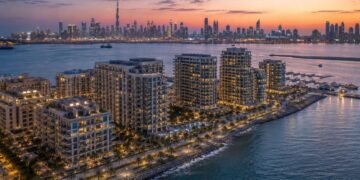
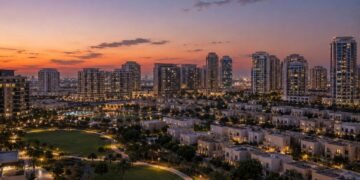























Dubai, UAE — Dubai is heading for its largest volume of home completions since 2008, and the leasing market has already started to respond. Apartment rents fell 6.2% during the second quarter, according to CBRE, while transaction volumes dropped to fewer than 37,000 sales, down 29% from the same period of 2025. Colliers recorded average apartment and villa prices both falling 3% quarter-on-quarter.
Into that market, Azizi Developments said on Tuesday it intends to hand over 10 more projects before the end of December. For buyers holding contracts due to complete in the next four months, the question shifts from whether a unit gets built to what it earns once it does. Dubai off-plan handovers are arriving faster than at any point in this cycle, and the rent a finished unit commands in late 2026 is below what most 2023 and 2024 buyers assumed.
Seven Delivered, Ten Promised In Fifteen Weeks
The developer said it has handed over seven projects during 2026 to date. According to the company, it has more than 150,000 units under construction at various stages and has delivered over 45,000 homes to buyers of more than 100 nationalities since it was founded.
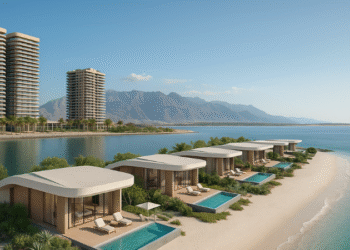
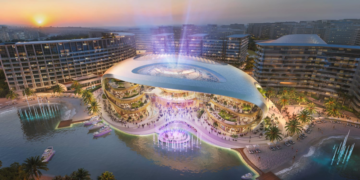
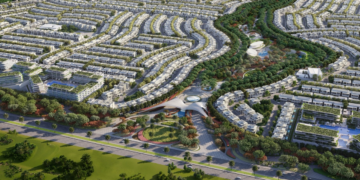
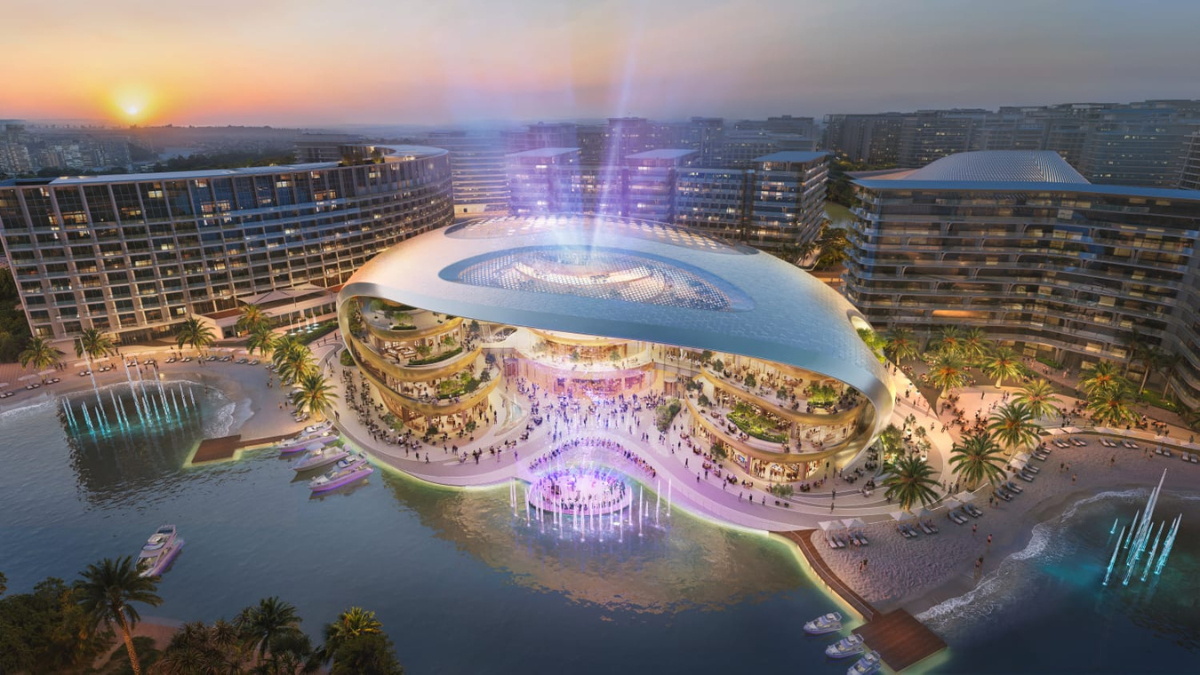
Azizi Venice in Dubai South remains among the communities still in delivery. The company describes it as a waterfront community built around an 18 kilometre swimmable lagoon and anchored by a 700 metre retail boulevard, located close to Al Maktoum International Airport, with construction continuing across phases ahead of handovers scheduled through 2026 and into 2027.
Farhad Azizi, Group CEO of Azizi Group, said: “The pace of handovers across our portfolio this year reflects the discipline, precision and focus on quality that guide every stage of our construction and handover process. With further projects scheduled for delivery in the months ahead, we remain firmly focused on maintaining this momentum across our portfolio, while delivering the quality and lifestyle our residents and investors expect from us.”
Dubai Off-Plan Handovers Hit Their Highest Level Since 2008
Cushman & Wakefield Core’s H1 2026 research puts Dubai on track for roughly 55,600 completions this year, with about 32,000 units landing in the second half. That is the heaviest annual completion volume in 18 years, and it explains why delivery capability has become the variable developers now compete on rather than launch volume.
Rival developers are making the same argument. Announcing its own handover programme this month, DAMAC managing director Amira Sajwani said “the ability to execute at scale will increasingly differentiate developers” as the market matures. The supply is largely spoken for: Dubai Land Department data reported by Gulf News shows 80,127 of the 96,585 homes due for handover during 2026, or 82.9%, had already been sold. The pressure from this wave shows up in rents and resale pricing, not in unsold inventory.
What A Delivery Surge Does To Yield Math In Dubai South
Dubai South sits directly in the path of that supply. Property Finder’s 2026 rent forecast names Dubai South alongside Business Bay and Jumeirah Village Circle as the districts seeing the sharpest rent softening as large volumes of new units are handed over in late 2026. Morgan’s International Realty ranks Azizi Venice third among Dubai’s most active supply zones for 2025 to 2027 at 7,860 units, behind JVC and Business Bay.
That matters because the district’s investment case has been sold on yield. Brokerage material for the area has cited gross rental yields of 6% to 9% and annual capital appreciation of 8% to 12% tied to Al Maktoum airport milestones. Those ranges were built on rent levels set before the current adjustment. A studio bought in 2024 on an assumed AED 55,000 lease competes in 2027 against hundreds of near-identical studios in the same community, handed over in the same window.
The Numbers Worth Checking Independently
The 150,000-unit construction figure is the developer’s own and has not been verified against Dubai Land Department or third-party consultancy data. The broader pipeline record argues for caution on scheduled dates generally. Cushman & Wakefield Core found that only around 186,000 of the nearly 525,000 units planned through 2030 have passed 20% construction progress, and warned that supply chain constraints and contractor capacity pressures are likely to slow deliveries.
For a buyer, the constraint is concentration rather than the market-wide total. When thousands of comparable studios and one-bedroom units reach handover in a single community over two or three quarters, they compete with each other for the same tenant pool. Service charges begin on handover, vacancy periods lengthen, and first-year net returns diverge from the gross yield used at the point of sale.
Three Tests For Azizi Venice Over The Next Two Quarters
The first is completion discipline. Whether the 10 promised projects receive their building completion certificates before December, or slip into the first quarter of 2027, gives a cleaner read on Azizi’s delivery capacity than any portfolio-level figure.
The second is leasing depth. New tenancy contract registrations for Dubai South on the DLD system, and the rents achieved on them, will show whether the corridor is drawing tenants or only buyers. The third is resale listing volume in handed-over Azizi phases. A sharp rise in listings within weeks of handover would indicate how much of the buyer base was investor capital looking for an exit rather than end-user demand.
Where Indian And NRI Buyers Sit In This Cycle
Indian and NRI buyers who committed during the 2023 to 2025 run-up are now moving out of the payment-plan phase and into the income phase, where actual rents and service charges replace projections. ANAROCK reported Dubai residential prices declining around 4% to 7% between February and April 2026, though H1 2026 residential transactions were still worth roughly AED 225.7 billion. This is a repricing, not a market in retreat, but it removes the margin for error that rapid appreciation used to cover.
End-users get the better side of this cycle. More completed stock means choice, negotiating room on rent, and the ability to inspect a finished unit rather than buy from a render. For investors, the discriminating factor is now location within the supply wave rather than exposure to Dubai as a whole. A unit in a district absorbing 7,000-plus new homes behaves differently from one in a district absorbing 700, and that distinction will do more to determine returns over the next 24 months than the headline direction of the market.
Discover more from Invest Dubai Today - Dubai Realty Insights
Subscribe to get the latest posts sent to your email.