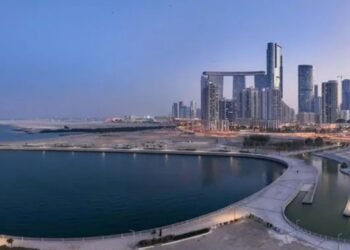
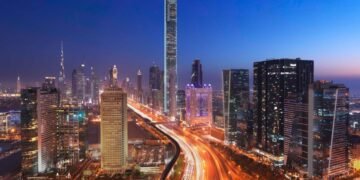






















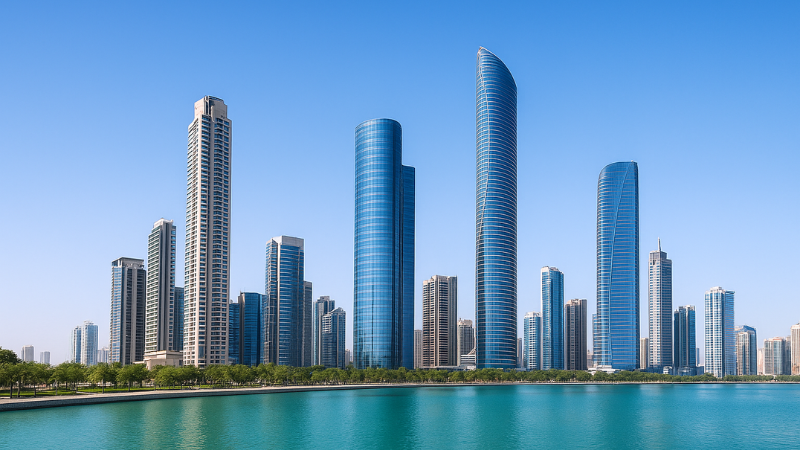
Abu Dhabi, UAE — Abu Dhabi closed 2025 with record-breaking activity, as Abu Dhabi real estate transactions 2025 reached AED142 billion across 42,814 deals, marking a 44% increase in value and a 52% rise in transaction volume compared to the previous year.
The year-end data, released by the Abu Dhabi Real Estate Centre (ADREC), signals accelerating capital inflows into the emirate’s property market and underscores a structural shift toward greater liquidity, regulatory maturity, and international participation.
Liquidity Expansion Across Segments
Of the total transaction value, AED99.4 billion came from sales and purchases across 25,604 deals, while mortgage activity accounted for AED42.7 billion from 17,210 transactions.
The balanced distribution between outright sales and mortgage-backed transactions reflects growing depth in the emirate’s financial ecosystem. Mortgage participation at this scale indicates sustained confidence from local and international financial institutions, while also pointing to stronger end-user engagement alongside investor activity.
Also read: Object 1 Deploys AED 4.5bn into Abu Dhabi’s Family-Focused Waterfront Supply
The increasing integration of financing into the transaction mix marks a departure from purely investor-led cycles and suggests a more institutionally anchored market structure.
Foreign Capital Deepens Footprint
Foreign Direct Investment (FDI) in Abu Dhabi’s real estate market reached AED8.2 billion in 2025, representing a 13% increase year-on-year. Investors from more than 100 nationalities participated in the market, with notable inflows from Russia, China, the UK, the US, France, and Kazakhstan.
Investment zones accounted for 72% of total foreign real estate investment activity, recording AED54.13 billion in value, a 65% increase compared to AED32.89 billion in 2024.
The geographic diversity of investor origins highlights Abu Dhabi’s expanding global capital base, moving beyond traditional GCC corridors into broader international markets. This diversification reduces concentration risk while reinforcing the emirate’s positioning as a cross-border investment destination.
Governance and Market Maturity
Rashed Al Omaira, Director-General of ADREC, attributed the performance to deliberate regulatory reforms and institutional strengthening.
“The outcomes recorded in 2025 are not accidental — they reflect a real estate market that has been deliberately shaped around trust, clarity, and long-term confidence,” he said, noting that governance, data transparency and investor protection have played central roles in attracting and retaining capital.
The regulatory framework has increasingly focused on structured licensing, digital platforms and compliance standards. In 2025, 56 new real estate development projects were registered, while professional licensing increased by 57.7% to 3,566 licensed professionals, suggesting a scaling of sector infrastructure alongside transaction growth.
Supply Pipeline and Absorption Watch
The expansion in project registrations signals developer confidence, yet it also introduces questions about future absorption capacity.
Also read: Al Jurf Beachfront Villas Abu Dhabi Enter Delivery Phase
As Abu Dhabi moves into 2026, the pace of new project launches will require sustained demand to avoid inventory imbalances. Mortgage growth has supported liquidity in 2025, but global rate volatility and macroeconomic shifts could influence financing costs and transaction momentum in the coming year.
Additionally, the concentration of foreign investment within designated zones, while positive for liquidity, could create micro-market sensitivity if supply pipelines cluster in specific districts.
Nonetheless, the broader macro backdrop remains supportive. Abu Dhabi continues to benefit from economic diversification policies, sovereign wealth capital flows, and long-term urban planning initiatives that anchor property demand to employment growth and infrastructure expansion.
Structural Shift in Capital Retention
The scale and composition of Abu Dhabi real estate transactions 2025 suggest the emirate is transitioning from cyclical expansion to structurally embedded growth.
The combination of high transaction volumes, rising FDI participation, mortgage-backed liquidity and regulatory oversight indicates a market increasingly capable of retaining capital rather than relying solely on episodic inflows.
As 2026 begins, the sustainability of growth will hinge on maintaining financing accessibility, disciplined supply introduction, and continued regulatory clarity. If those conditions hold, Abu Dhabi’s property market may further consolidate its position as one of the region’s most institutionally mature real estate ecosystems.
Discover more from Invest Dubai Today - Dubai Realty Insights
Subscribe to get the latest posts sent to your email.