






























Dubai, UAE — Rising material prices and persistent supply chain pressure are reshaping project economics across the emirate, elevating Dubai construction cost inflation risk as a central concern for developers and investors. In that environment, early delivery is emerging as a strategic differentiator rather than an operational bonus.
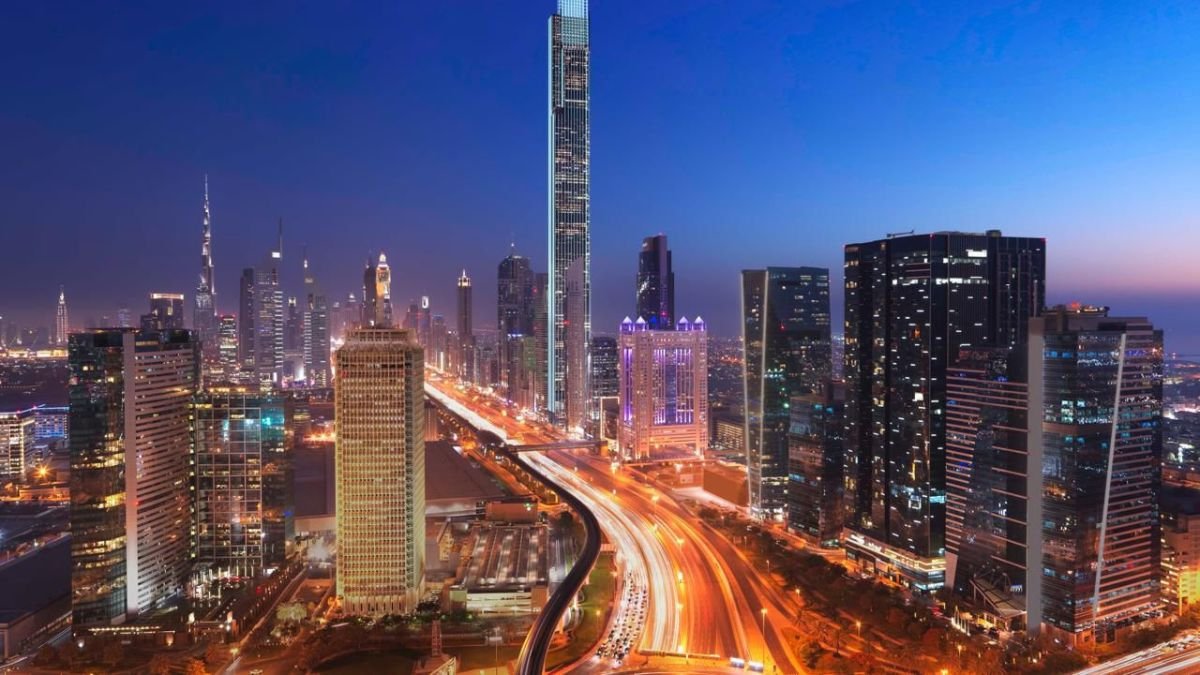
Century Tower, a 23-floor residential building in Business Bay comprising 210 units, has completed handovers two months ahead of schedule. Developed by AMBS Real Estate Development, with fäm Properties acting as master agent, the project offers a timely case study in execution discipline amid rising cost pressures.
Construction Costs Reset Developer Assumptions
According to a Turner & Townsend report, construction materials now account for roughly 60% of baseline building costs in the UAE. Concrete, structural steel, MEP systems, plastics and timber are forecast to rise further this year, while supply chain friction continues to affect procurement timelines.
In such conditions, delayed construction translates directly into margin compression. The longer projects remain unbuilt after launch, the greater the exposure to cost escalation.
Also read: Why Dubai Developers Face a Land Price Reckoning in 2026
Firas Al Msaddi, CEO of fäm Properties, said developers can no longer rely on historic pricing assumptions.
“Developers who have launched projects, whether fully sold or partially sold, must recognise that the market pricing they relied on two or three years ago, or even one year ago, is no longer relevant. Construction costs have increased and are still rising,” he said.
“The longer that construction is delayed, the higher the cost the developer has to absorb, and the primary driver, inflation, is forecast to continue rising over the coming years.”
The implication is clear: construction velocity now carries financial consequences beyond scheduling efficiency.
Off-Plan Demand Remains Strong
Despite inflationary pressure, off-plan activity continues to dominate Dubai’s transaction volumes. DXBinteract data shows that in January alone, first sales from developers accounted for 12,106 transactions valued at AED52 billion, compared with 5,362 resales worth AED20.5 billion.
Demand remains robust, but the structure of buyer expectations is evolving. Investors and end users are placing greater emphasis on delivery certainty as part of their risk assessment.
Also read: Binghatti’s 2025 Results Show Which Developers Can Scale and Deliver
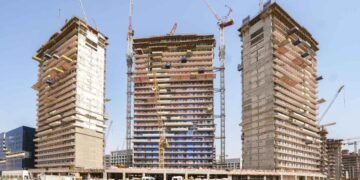
Century Tower’s launch in June 2024 saw more than 90% of units sold on the first day. Unlike many off-plan launches that begin marketing before construction mobilisation, building work on the tower was already well advanced at launch.
That sequencing reduced execution uncertainty and shortened the time between sale and handover.
Delivery Discipline as Market Signal
In a maturing market, execution track record increasingly influences pricing power and buyer confidence. Early completion helps mitigate one of the primary concerns surrounding off-plan investments: timeline slippage.
Al Msaddi noted that buyer behaviour has shifted in recent years.
“This response to property launches has generally become much more considered in recent years, as investors and end users take more time and care to analyse projects, and do their own market research,” he said.
“Buyers look beyond the marketing renders and location promises. They want to see that the developer has a trusted reputation for quality construction and timely delivery.”
As pipeline volumes expand across the city, delivery reliability becomes a reputational asset.
Margin Pressure and Working Capital Constraints
While early delivery offers strategic advantages, it also requires stronger upfront capital discipline. Developers are increasingly purchasing materials in bulk to reduce exposure to price volatility and limit lead times. That approach mitigates cost risk but increases working capital requirements.
Projects launched without secured contractors, procurement strategy or realistic construction timelines face heightened vulnerability to inflation drift. With materials representing the majority of build costs, even moderate percentage increases can materially impact feasibility models.
In that context, the conversation shifts from sales velocity alone to construction velocity and procurement management.
Century Tower’s early handover does not eliminate broader market pressures, but it illustrates how sequencing and contractor readiness can reduce exposure to Dubai construction cost inflation risk.
What It Signals for the Market
As inflationary conditions persist, developers that initiate construction promptly after launch may protect margins more effectively than those relying on extended pre-construction sales cycles.
For investors, earlier handovers shorten the path to rental income or resale liquidity. For end users, they reduce uncertainty around move-in timelines.
The broader takeaway is structural rather than celebratory. Rising material costs and supply chain constraints are tightening operational margins across Dubai’s development landscape. In this environment, disciplined execution is becoming a competitive advantage rather than a routine expectation.
If cost inflation remains elevated through 2026, delivery performance may increasingly separate well-capitalised, execution-focused developers from those dependent primarily on launch-driven momentum.
Discover more from Invest Dubai Today - Dubai Realty Insights
Subscribe to get the latest posts sent to your email.