































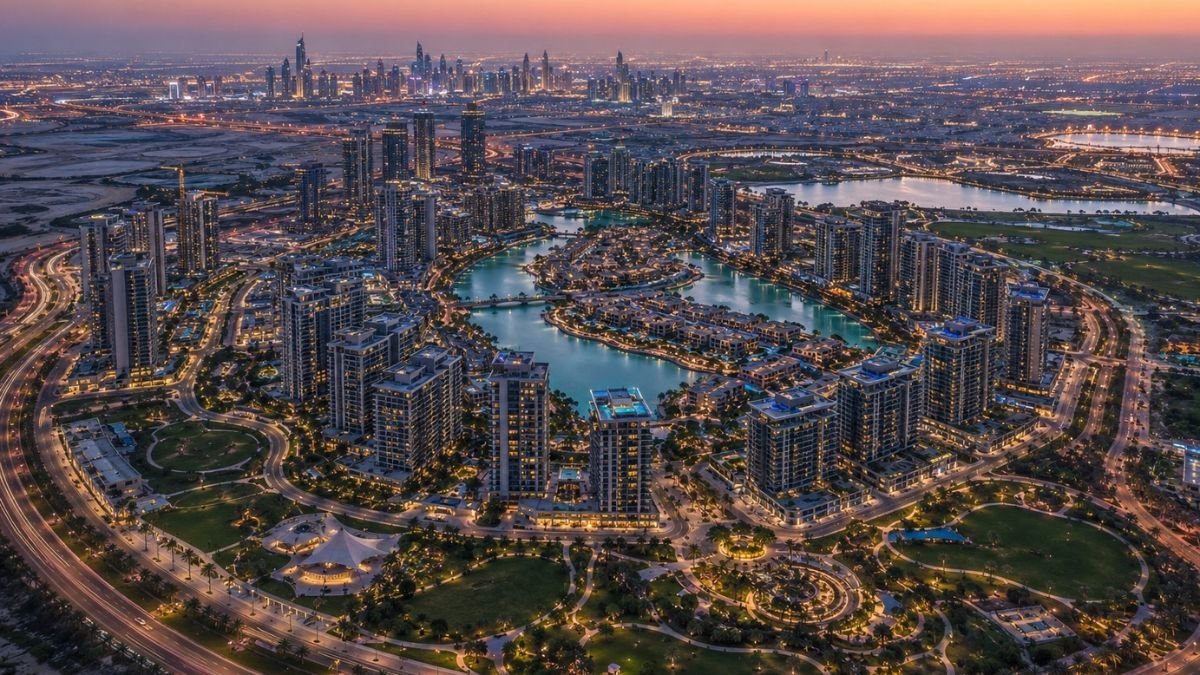
Dubai, UAE — Emaar Properties is preparing to launch a master-planned development worth an estimated AED 200 billion, built to house close to 150,000 residents across more than 4.5 million square metres in central Dubai. The announcement arrives alongside a separate forecast that the emirate’s project pipeline could exceed AED 1 trillion over the next five years.
What changes for investors is less the volume of supply than where it pools. The Dubai master-planned mega project is becoming the unit that decides returns, ahead of the individual tower or the scattered off-plan unit.
What The Numbers Show
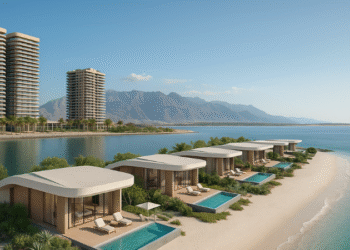
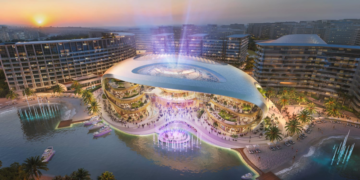
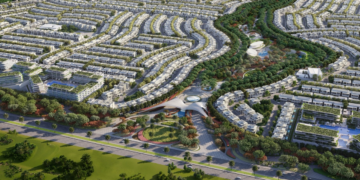
Emaar’s planned development will be structured around five zones: a business hub, an urban residential area, family-oriented communities and a luxury villa enclave, with parks, lagoons and cycling routes threaded through the masterplan. The company says it will follow “20-minute city” principles, placing schools, clinics, mosques and retail within walking distance, with proposed metro connectivity still to be confirmed.
The wider forecast, reported by Arabian Business on 17 June, ties the AED 1 trillion figure to announced developer launches, recent build rates and targets under the Dubai Economic Agenda D33. Emaar is not moving alone. BEYOND Developments has unveiled a Dhs4bn masterplan called The Yards at City of Arabia, part of a broader move by master developers into integrated districts rather than single buildings.
The financial base looks supportive. Emaar reported first-quarter 2026 revenue up 23 per cent and EBITDA up 34 per cent, giving the developer earnings visibility to commit to long-dated launches. Mohamed Alabbar, the company’s founder, framed the project in long-horizon terms. “We have always believed that the greatest cities are not built, they are dreamed,” he said in a statement.
Why The Dubai Master-Planned Mega Project Now Sets The Terms
The investor question is shifting from which tower to which masterplan. Buying into a large, single-developer district changes the risk profile. It offers infrastructure certainty, a master-developer covenant over quality and amenities, and value that accrues as a community matures rather than from one building’s resale alone.
The cost is time and concentration. Capital is locked across a longer horizon, delivery runs in phases, and the buyer’s outcome rides on one developer’s execution. Walid Al Zarooni, chief executive of W Capital Real Estate, said the Emaar project “points to a new phase of urban and investment expansion in Dubai,” adding that the emirate has the foundations to keep its position as one of the region’s leading real estate markets.
Where This Sits In Dubai’s Cycle
These mega launches land on a market that is already heavily concentrated. Land Department figures for 1 to 15 June show off-plan sales at roughly 84 per cent of apartment activity, with studios and one-bedroom units making up about three-quarters of transactions and activity clustered in a handful of districts.
That matters for interpretation. The Dubai master-planned mega project layers long-dated, mixed-use supply on top of a market still driven by compact off-plan stock. It points to a slow rotation away from speculative unit churn toward longer city-building bets aligned with the emirate’s population and urban growth targets.
The Risks Behind The Headline Numbers
The AED 1 trillion figure is a forecast, not committed capital, and the gap between announced and delivered projects can be wide. If launch rates outpace population growth, absorption risk rises and pricing power narrows for later phases. Emaar has not disclosed a completion timeline or phasing detail, which leaves early off-plan buyers exposed to delivery sequencing they cannot yet see.
The near-term backdrop is also softer. Dubai’s market cooled in May on transaction value, and regional security tensions around the Gulf remain a live variable for sentiment and construction costs. None of this breaks the long-term case, but it argues against treating a mega-project launch as a one-way bet.
Where The Emaar Launch Gets Tested
The formal Emaar unveiling should clarify pricing, phasing and whether metro links are confirmed rather than proposed. Watch absorption against the launch wave, the resale terms developers offer on early phases, and whether other master developers follow Emaar’s scale. Sustained off-plan dominance in monthly Land Department data would confirm that the Dubai master-planned mega project is reshaping demand rather than merely adding to it.
A Patient Bet, And Who It Suits
For end-users, the shift promises walkable, amenity-led communities with services built in from the start. For investors, the Dubai master-planned mega project is a long-horizon play backed by infrastructure, suited to patient capital rather than quick flips. For Indian and NRI buyers weighing rupee-to-dirham entry, a master-developer district offers a currency-hedged, covenant-backed route into Dubai, provided buyers price in phased delivery, capital lock-up and resale timing before committing.
Discover more from Invest Dubai Today - Dubai Realty Insights
Subscribe to get the latest posts sent to your email.