































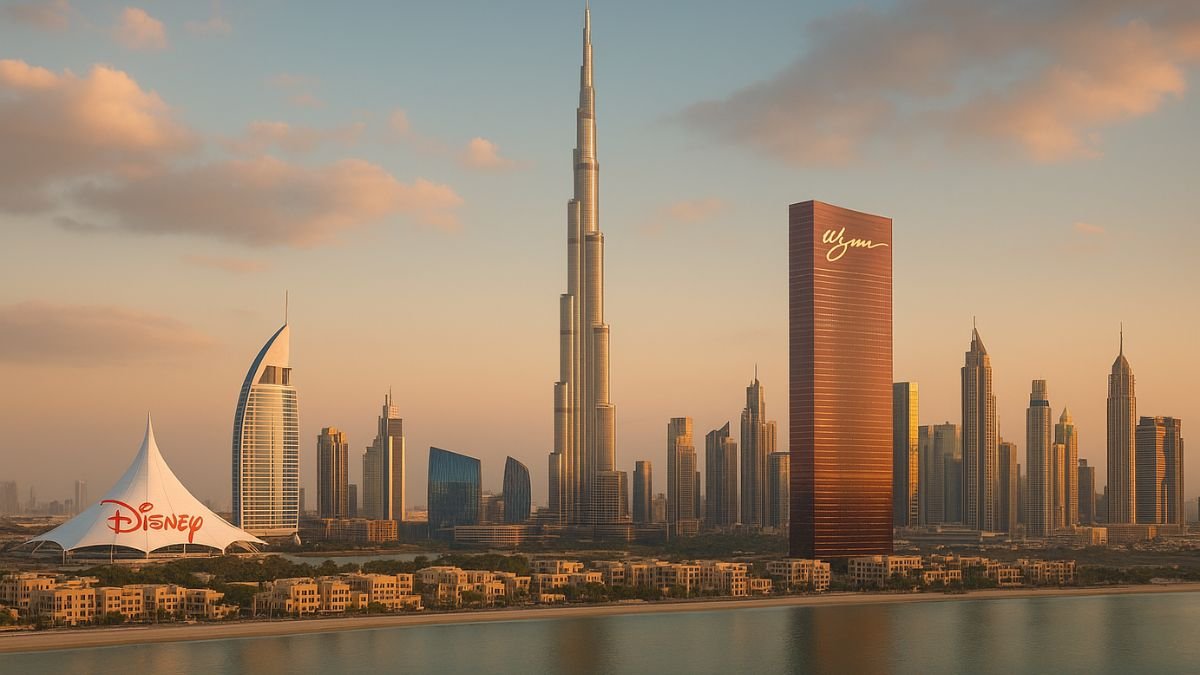
Dubai, UAE – As Abu Dhabi advances plans for a Disneyland resort and Ras Al Khaimah moves ahead with the UAE’s first integrated casino, property analysts say the Dubai real estate impact by new entertainment hubs could redefine investor sentiment and yield dynamics across the Emirates.
Both projects highlight a shift in regional development priorities — from pure real estate expansion to experience-driven tourism economies. Analysts say the outcome could influence how capital is allocated within the UAE over the next decade.
On May 7, 2025, Disney and Miral announced a deal to develop the first Disney theme park in the Middle East on Yas Island in Abu Dhabi. Under the partnership, Miral will build and operate the resort while Disney licenses its intellectual property and earns royalties, Reuters reported.
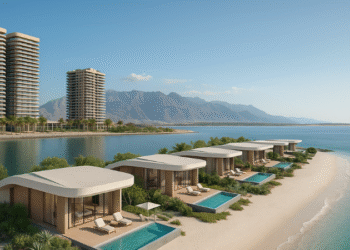
In Ras Al Khaimah, Wynn Resorts confirmed in October 2024 that it had received the country’s first commercial gaming license to develop a luxury integrated resort on Al Marjan Island.
Capital Shifts and New Yield Frontiers
The new entertainment hubs are already affecting sentiment in the wider property market. “There’s definitely a growing buzz and a noticeable uptick in interest … we are confident in the short, medium and long-term interest in Yas,” Riyad Magdy, Chairman and Founder, Oia Properties, said in an exclusive interview with Arabian Business.
Also read: Dubai Luxury Property Market Hits $2 Billion in Q3 2025
Market data shows Abu Dhabi’s average residential sales price rose 13.4 percent year-on-year in early 2025, supported partly by heightened investor expectations following Disney’s announcement.
In RAK, analysts say properties around Al Marjan Island are commanding premiums of 20–50 percent over the past two years, as buyers anticipate tourism-led growth from Wynn’s resort. Developer-side data from Prelaunch.ae indicates short-term rental yields of up to 12–18 percent near the project.
“Yields in Ras Al Khaimah could outperform the Dubai average by as much as three percentage points in the near term,” said a senior analyst, adding that investors are starting to look beyond the established Dubai market for new opportunities.
Such yields, if sustained, could attract investors away from Dubai’s mature but lower-yielding districts. However, Dubai’s liquidity and established demand base still make it a regional safe haven for institutional buyers.
Tourism Synergy and Spillover Demand
Industry experts note that Dubai may benefit from “spillover tourism,” as new entertainment destinations draw longer-stay visitors to the UAE.
“Disneyland will have a positive and far-reaching impact on Abu Dhabi … boosting interest in off-plan projects, but also reaching into all surrounding areas,” Arabian Business reported, citing property analysts observing higher regional booking rates.
With Etihad Rail expected to cut travel time between Dubai and Abu Dhabi to around 30 minutes, Dubai’s hospitality and short-term rental markets could absorb part of the traffic generated by these mega-attractions.
According to Knight Frank’s UAE Hospitality Market Review 2024, Dubai maintained an average hotel occupancy of 77% in the first half of 2024, among the highest in the GCC. The firm attributed this resilience to a steady influx of international visitors and a diversified tourism strategy spanning leisure, business, and long-stay segments.
“The synergy between a robust economy and a dynamic, vibrant hospitality and tourism sector is evident across the region as the GCC states collectively pursue an economic future that is far less reliant on oil than it is today. The UAE, and Dubai in particular, has blazed a trail in this regard …,” said Faisal Durrani, Partner – Head of Research, MENA, Knight Frank.
Regulatory Signaling and Investor Confidence
The UAE’s approval of a commercial casino license also signals a shift in regulatory tone. The creation of a federal gaming authority and Wynn’s progress indicate a more open investment environment for leisure and entertainment sectors. This, analysts say, can reinforce foreign investor confidence across the Emirates, including Dubai.
Also read: Dubai, Abu Dhabi Real Estate Markets Hit Record Q3 Highs
Still, some capital may reallocate toward newer frontier zones. If RAK or Abu Dhabi continue to deliver superior yields, Dubai’s peripheral communities could experience slower capital appreciation relative to prime districts.
However, market observers say Dubai’s consistent legal reforms — such as streamlined visa categories and ownership rules — will continue to underpin its resilience. “Prices are continuing to rise and the transient nature of Dubai seems to be well and truly over,” Taimur Khan, the head of research at global property advisory firm CBRE Group Inc, said in an interview to Zawya.
Risks and Buffers
Risks:
- Capital diversion to higher-yield markets in Abu Dhabi and RAK
- Rising competition for entertainment-driven tourism spending
- Short-term slowdown in speculative demand in Dubai’s fringe projects
Buffers:
- Dubai’s global brand and scale, with over 60,000 residential units delivered in 2024, ensures market depth
- A well-established global investor network and transparent property laws
- Diversified hospitality and logistics infrastructure
- Potential new entertainment clusters under consideration by Dubai’s Department of Economy and Tourism
Market Forecast: 5-Year Outlook
According to industry reports, Dubai’s property market is expected to maintain annual price growth between 4–6% through 2030, while Abu Dhabi and RAK could record higher but more volatile growth rates due to new project cycles.
Dubai’s rental yields — currently averaging 6.3% in mid-range communities and 5% in prime areas — may stabilize as more institutional investors enter. In contrast, RAK and Abu Dhabi’s new districts could offer temporary yield spikes until supply catches up with investor enthusiasm.
Analysts agree that Dubai will likely remain the UAE’s liquidity hub, serving as a financing, logistics, and service base for the broader market expansion.
Indian Investor Outlook
For Indian investors, who remain among Dubai’s largest buyer groups, diversification across emirates may become a practical strategy.
Real estate advisors recommend blending core Dubai assets for stability with smaller allocations in high-yield areas such as Yas Island or Al Marjan Island. Monitoring infrastructure expansion and regulatory shifts will be key to timing entries effectively.
A Multi-Emirate Future
The Dubai real estate impact by new entertainment hubs underscores a maturing property ecosystem where capital, tourism, and development are no longer concentrated in a single city.
Dubai’s advantage lies not only in being first, but in staying ahead — through policy agility, global branding, and infrastructure leadership. The next phase of UAE real estate growth may not be zero-sum, but multi-polar, where Dubai, Abu Dhabi, and RAK together expand the region’s investment frontier.
Discover more from Invest Dubai Today - Dubai Realty Insights
Subscribe to get the latest posts sent to your email.