






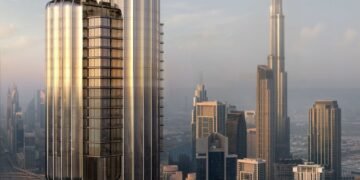
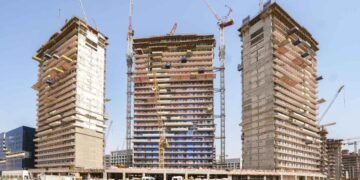

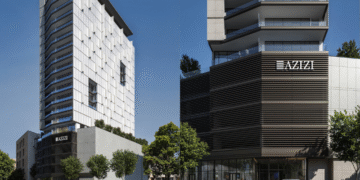
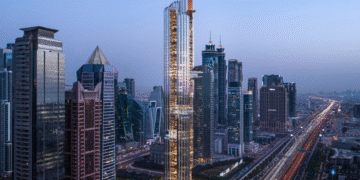











Dubai, UAE — Dubai’s commercial real estate market is entering 2026 in a more selective phase, as investors narrow their focus toward assets with clearer income visibility and execution certainty, rather than broad-based expansion. While transaction volumes remain supported by regulatory stability and business formation, capital deployment is becoming increasingly targeted across offices, logistics, and community retail.
Market commentary from global consultancy Chestertons suggests this shift reflects a maturing cycle, where quality, location, and long-term leasing depth are taking precedence over speed of entry.
What Is Driving Investor Attention
Investor interest is concentrating around three segments: off-plan office developments, logistics and warehousing assets, and neighbourhood retail centres, according to the consultancy’s market research.
Also read: Danube Group Unveils Sheikh Zayed Road Commercial Tower Shahrukhz
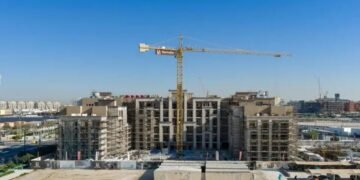
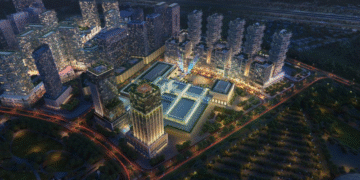
Off-plan offices continue to attract attention due to a limited supply of high-quality, modern stock in established business districts. This has encouraged both investors and occupiers to secure space earlier in the development cycle, particularly in locations with transport connectivity and established commercial infrastructure.
Logistics and warehousing assets remain another core focus, underpinned by Dubai’s role as a regional trade and distribution hub. Demand is supported by the emirate’s ports, free zones, and integrated transport corridors, which connect businesses to markets across Europe, Asia, and Africa. With regional population growth continuing to drive consumption, storage and distribution facilities are viewed as comparatively resilient income-generating assets.
Retail investment, meanwhile, is shifting away from destination malls toward community-based centres embedded within residential catchments. These assets benefit from repeat footfall driven by local demand rather than discretionary spending cycles, aligning with investor preference for stable leasing profiles.
Regulatory Stability Shapes 2026 Outlook
Chestertons expects the regulatory environment in 2026 to remain broadly supportive of commercial activity without materially altering overall investment volumes. Recent updates to commercial laws, which allow companies to re-domicile more easily between free zones, mainland jurisdictions, and across emirates, are expected to improve operational flexibility rather than disrupt demand.
Despite these changes, most commercial licences continue to require a physical office presence, which is likely to sustain baseline demand for office space rather than dilute it.
Market participants note that mixed-use buildings with shared residential infrastructure continue to see limited corporate uptake, as occupiers prioritise dedicated commercial environments offering independent access, parking, and amenities designed specifically for business operations.
Geography Matters More Than Ever
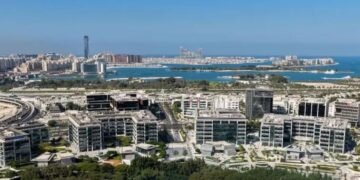
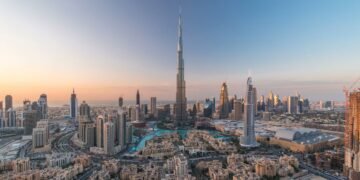
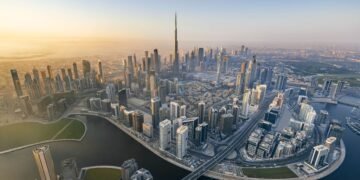
Beyond traditional business districts, commercial demand is becoming more geographically distributed. Business Bay, Jumeirah Lake Towers, and Barsha Heights continue to attract office occupiers due to accessibility and established infrastructure.
Also read: Sweid & Sweid Industrial Real Estate Investment Hits AED 350m Exit
At the same time, emerging residential districts such as Jumeirah Village Circle and Arjan are beginning to see their first dedicated commercial launches, reflecting decentralisation as businesses follow population growth.
Industrial zones including Dubai Investment Park, Dubai Industrial City, National Industrial Park, and Al Quoz remain focal points for logistics and warehousing activity. Improved infrastructure and proximity to expanding residential communities are gradually shifting commercial activity away from historic central business districts.
Investor Behaviour Is Splitting by Profile
Chestertons’ analysis highlights a growing divergence between domestic and international investor behaviour.
Overseas investors are expected to remain active in office and retail assets, drawn by relatively straightforward ownership structures, predictable leasing arrangements, and lower operational involvement. These characteristics make such assets easier to manage remotely and more suitable for portfolio diversification.
Domestic investors, by contrast, are expected to dominate logistics and warehousing development. These projects often involve land acquisition, longer execution timelines, and more hands-on oversight, favouring investors with local market knowledge and operational capacity.
This bifurcation underscores a broader theme: capital is not retreating, but it is becoming more specialised.
Income Stability Takes Priority
Investor strategies in 2026 are increasingly centred on balancing rental income stability with long-term capital preservation. Rather than prioritising yield or appreciation in isolation, decision-making is focused on sustainability — including tenant quality, lease duration, and asset adaptability.
Also read: What’s Driving Indian Investor Demand in Dubai South Mega Development
Mohamed Mussa, Executive Director of Chestertons MENA, said the market is moving into a more measured phase where clarity and selectivity matter more than speed. His assessment reflects a wider recalibration underway, as investors favour assets that can perform consistently through different economic conditions rather than relying on cyclical uplift.
Risks and Constraints to Watch
Despite supportive fundamentals, risks remain. Increased competition among new commercial developments could place pressure on rents in certain submarkets, particularly if delivery timelines converge. Execution risk also remains relevant in off-plan office and logistics projects, where delays or cost overruns can affect income timing.
Additionally, while decentralisation supports long-term growth, emerging districts will need sufficient tenant depth to avoid short-term vacancy volatility.
What Comes Next
As Dubai’s commercial real estate market advances through 2026, investor outcomes are likely to depend less on market momentum and more on asset selection. Leasing depth, execution discipline, and alignment with population and business growth corridors will be key indicators to monitor.
For investors, the opportunity lies not in chasing volume, but in identifying assets positioned to deliver steady performance as the market settles into a more mature phase of growth.
Discover more from Invest Dubai Today - Dubai Realty Insights
Subscribe to get the latest posts sent to your email.