




























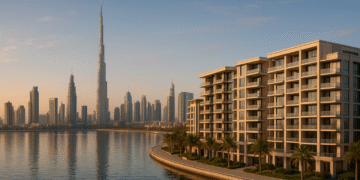

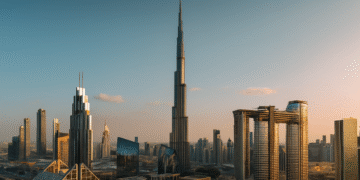


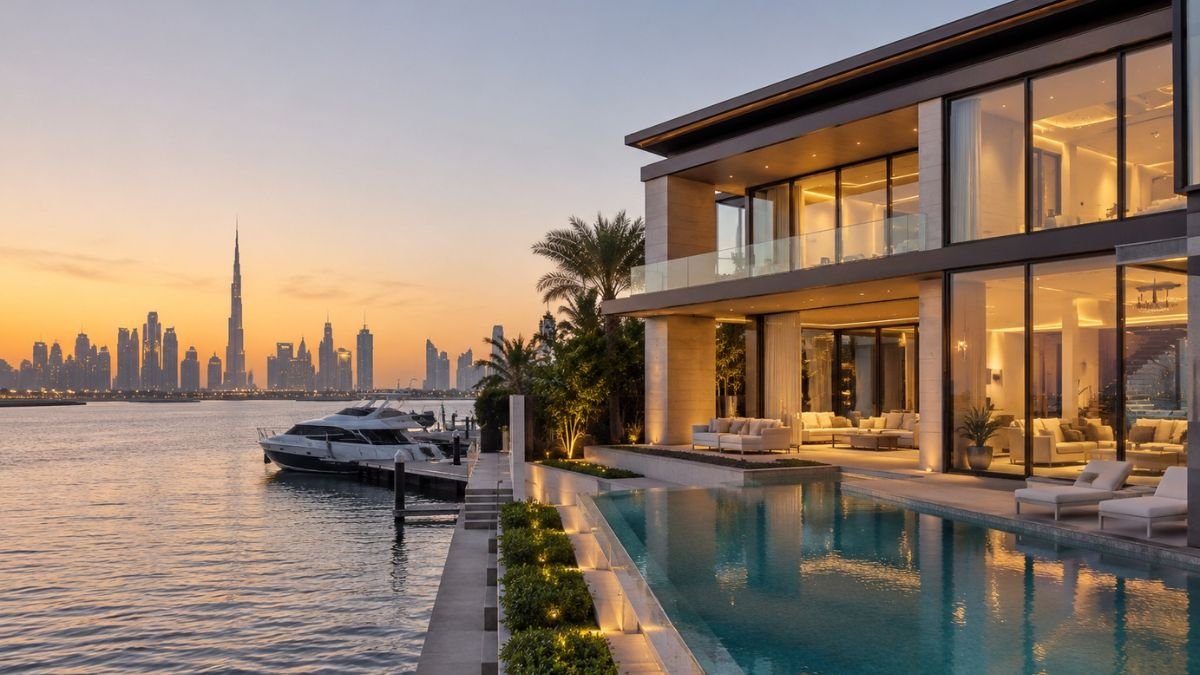
Dubai, UAE — A six-bedroom villa on Jumeirah Bay Island changed hands for Dh280 million this week. Two Business Bay apartments sold for AED69 million and AED61.4 million. A unit in Jumeirah’s Solaya 5 went for AED42.5 million. All four deals closed within days of each other, while the rest of Dubai’s residential market negotiates its way through a correction that has pulled off-plan resale values down since mid-2025.
What The Data Shows
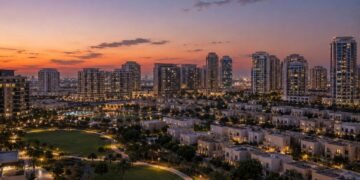
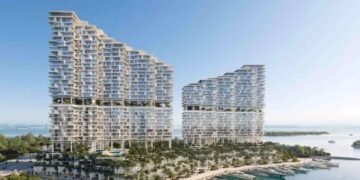
Dubai Land Department figures cited by Arabian Business show the emirate recorded AED10.17 billion ($2.8 billion) in real estate transactions between June 1 and June 5, including AED7.1 billion in sales across 2,884 deals. The three priciest sales that week were apartments in Omniyat’s Lumena tower (AED69 million) and Enara tower (AED61.4 million), both in Business Bay, and a unit in Jumeirah’s Solaya 5 (AED42.5 million).
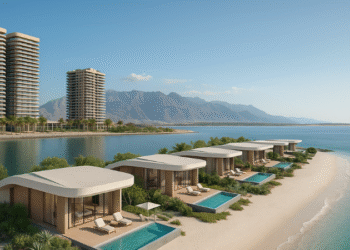
Two days earlier, Gulf News reported the Dh280 million ($76.2 million) sale of Villa Gaia, a six-bedroom, roughly 22,000-square-foot waterfront mansion on Jumeirah Bay Island developed by Alta Real Estate Development and designed by VSHD Design. Mohammad Al Tayer, the developer’s deputy managing director, said the sale “reflects what Dubai’s market has become: a destination where the world’s most discerning buyers come not just to invest, but to live at the highest possible standard.”
Also read: Dubai First-Time Home Buyer Programme Hits AED 5bn
These transactions sit on top of a broader 2025 trend. Knight Frank’s Wealth Report found Dubai closed 500 home sales above $10 million in 2025, generating $9.05 billion, up from just 30 such sales in 2020. Prime values rose 25.1 percent over the past year and nearly 194 percent over five years, the second-fastest growth rate globally. Knight Frank projects prime values will add roughly 3 percent more in 2026, against about 1 percent for the mainstream market.
What It Means For Capital Allocators
The gap between Dubai’s $10 million-plus segment and everything beneath it is widening, not narrowing, while mainstream off-plan resale prices run 10 to 15 percent below original values in several areas. That is not a contradiction. Two buyer pools are responding to two different sets of incentives.
Ultra-prime buyers in Jumeirah Bay Island, Palm Jumeirah and Emirates Hills are largely relocating wealth, not chasing yield. Land in these enclaves is structurally capped, so each new trophy sale resets a ceiling rather than testing a floor. For this cohort, a Dh280 million villa is a lifestyle and residency decision as much as a financial one, comparatively insensitive to the financing costs and rental-yield arithmetic that drive mid-market decisions.
Mainstream buyers, including most Indian and NRI investors, operate in a segment with abundant supply, financing-dependent demand, and thin resale comparables because so much new stock has arrived since 2022. That is the segment absorbing the correction.
Where This Fits In Dubai’s Cycle
Dubai has seen individual record sales before, including a Dh161 million Palm Jumeirah villa and a Dh330 million Jumeirah Bay Island deal, both during periods when commentators debated whether the broader market had peaked. What is different in 2026 is the scale of the gap. A $10 million-plus segment generating close to $9 billion a year now sits alongside a mainstream market where March transactions fell roughly 20 percent and the secondary market contracted 34 percent year-on-year during the spring’s regional tensions.
Also read: Dubai Property Market Rebound 2026: What April’s Data Tells Investors
For investors trying to read the cycle, the ultra-prime numbers are a poor proxy for what is happening to a Dh1.5 million apartment in Jumeirah Village Circle or Dubai South. The two markets are far enough apart that headline price indices blending both can mislead.
The Concentration Risk
Five hundred transactions a year is a small sample next to the roughly 170,000-plus total deals Dubai records annually. A handful of sales can swing average price-per-square-foot figures for an entire community without saying anything about liquidity at the median price point. Bespoke villas like Villa Gaia also have few direct comparables, making resale timing harder to forecast than for standardised apartments. If global wealth migration into Dubai slows, even modestly, this segment can cool faster than the headline growth suggests, given how concentrated its buyer base is.
What To Watch Next
The next data points worth tracking: whether Knight Frank’s projected 3 percent prime growth for 2026 holds through the second half, whether further $50 million-plus deals emerge in the same supply-constrained enclaves, and whether DLD’s weekly data shows the mainstream segment stabilising independently of the top end.
What This Means For Indian And NRI Investors
For Indian and NRI buyers, the relevance of this week’s sales is mostly about what they are not. Few NRI portfolios sit in the Dh40 million-plus bracket, and the forces behind Villa Gaia or the Lumena apartment, namely wealth relocation, residency planning and gated-enclave scarcity, do not transfer to a Dh1.2 million Business Bay apartment or a JVC studio. What does transfer is the broader signal: capital in Dubai is segmenting by price tier in a way it was not three years ago, when one rising tide lifted nearly every project. End-users and mid-market investors should expect more negotiating room and slower appreciation than the ultra-prime figures imply, and should read trophy-home sales as evidence of Dubai’s pull on global wealth, not a cue for their own segment’s near-term returns.
Discover more from Invest Dubai Today - Dubai Realty Insights
Subscribe to get the latest posts sent to your email.