



























DUBAI, UAE — After three years of record-breaking gains, Dubai’s property market is showing early signs of moderation, with analysts forecasting a cooling phase rather than a crash.
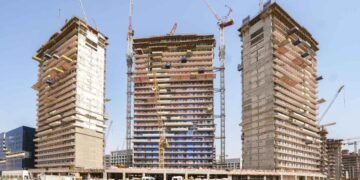
A Fitch Ratings report, published in May 2025, warned that residential prices could fall by up to 15% through late 2025 and 2026 as a wave of new housing stock enters the market. The agency estimates around 210,000 new units will be delivered in Dubai during this period — roughly double the number completed in the previous three years.
Fitch described the correction as “a natural phase of normalization” after prices surged nearly 60% between 2022 and Q1 2025, making Dubai one of the world’s best-performing real estate markets. The agency emphasized that the emirate’s developers and banks maintain “rating buffers” to withstand a moderate decline, noting that bank exposure to real estate borrowers had fallen to 14%, from over 20% a decade ago.
Market Still Active Despite Cooling Signs
Despite expectations of slower growth, market activity remains robust. Dubai recorded 53,252 property transactions worth AED 184.9 billion in Q2 2025 — its highest quarterly total on record — according to data from Property Finder.
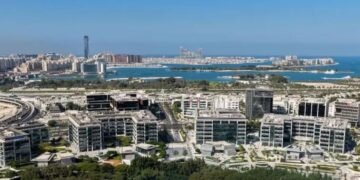
The surge in transaction volume has been driven largely by off-plan sales, which now account for more than 60% of total activity. Analysts note that buyer appetite has shifted toward branded residences and prime waterfront communities such as Palm Jumeirah, Jumeirah Bay Island, and Emaar Beachfront.
Expert Views: A “Soft Landing” Ahead
In its Dubai Residential Market Review, Knight Frank said the emirate’s housing sector was “moving into a more mature phase” following years of double-digit appreciation. While prices in some luxury neighborhoods continued to climb, the report described 2025 as a “year of price stabilization.”
UBS’s Global Real Estate Bubble Index 2024 placed Dubai in the “elevated risk” category but below other global hotspots such as Miami or Toronto. The report noted that Dubai’s risk of a speculative bubble remains contained due to population growth, limited credit leverage, and strong rental demand.
Deloitte’s Real Estate Predictions 2025 added that Dubai’s diversification strategy — driven by infrastructure spending, business reforms, and tourism expansion — continues to underpin housing demand. “Continued foreign investment and regulatory transparency will support market resilience even in a cooling cycle,” Deloitte stated.
Why a Crash Is Unlikely
The UAE’s property landscape has evolved considerably since the 2008 downturn. Developers now operate under stricter escrow regulations, phased project approvals, and improved mortgage oversight. These measures, analysts say, make a systemic collapse far less likely.
Unlike the past, supply additions are diversified across multiple corridors — from Dubai Creek Harbour to Expo City and Dubai South — rather than concentrated in a few speculative zones. Moreover, many buyers are end-users or long-term investors rather than short-term flippers.
Engel & Völkers’ Dubai Market Report notes that rental yields have remained among the highest globally, averaging 6–7% in 2025, helping to cushion returns during any price correction.
What Indian Investors Should Watch
Indian nationals continue to be the largest group of foreign investors in Dubai’s real estate market, accounting for about 15% of total property purchases in the first half of 2025, according to the Dubai Land Department.
Analysts recommend that Indian buyers adopt a long-term approach, focusing on developers with strong delivery records and escrow-backed projects. Completed or near-completion properties offer lower risk amid a potential correction.
Cushman & Wakefield Core’s latest Dubai Market Update highlights that investors are increasingly prioritizing asset quality and liquidity over speculative short-term gains.
For rupee-based investors, diversification and currency hedging remain important. With the UAE’s 10-year Golden Visa available for investments exceeding AED 2 million, Dubai continues to offer tangible residency and tax benefits unavailable in other global markets.
Outlook: A Measured Correction
Analysts broadly expect 2025–26 to bring a measured correction of 5–15% in prices, depending on project type and location. Knight Frank anticipates prime communities will remain resilient, while mid-tier areas could see greater price adjustments.
Fitch concludes that even in a downside scenario, “the Dubai property sector is unlikely to trigger systemic stress.” Economic momentum, population growth, and tourism recovery remain strong buffers.
In short, the real estate crash UAE narrative appears exaggerated. A slowdown is underway — but it looks more like a controlled descent than a free fall.
Discover more from Invest Dubai Today - Dubai Realty Insights
Subscribe to get the latest posts sent to your email.