

























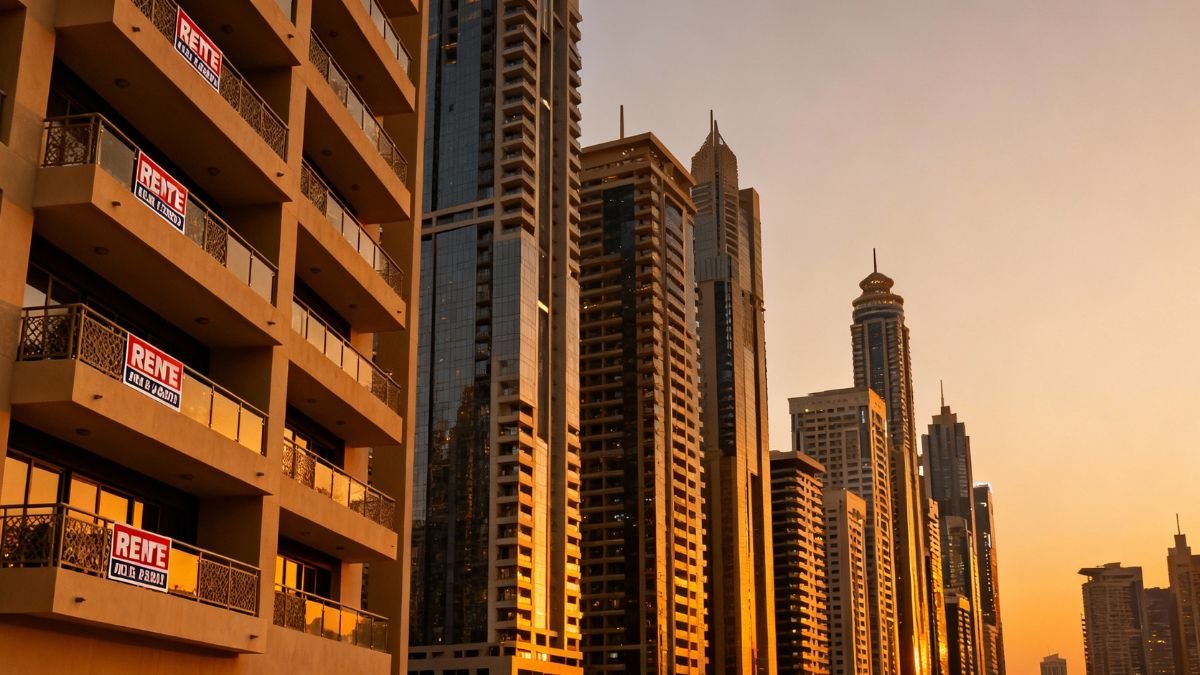
Dubai, UAE — Dubai’s residential rents and transaction volumes are near record highs, yet a growing number of landlords say their units are sitting vacant for longer than expected, especially in mid‑market and oversupplied communities. For many investors — including a rising cohort from India — the question is no longer whether Dubai is a strong rental market, but why is your Dubai investment property not renting out in a city where demand appears robust on paper.
Market Still Favors Landlords, But Gaps Are Emerging
Recent data from CBRE shows average residential rents in Dubai rising by more than 21% year‑on‑year in parts of 2024, with apartment rents outpacing villas as tenants adjust to higher housing costs. ValuStrat estimates residential occupancy close to 90%, underscoring how tight the market remains at a city‑wide level.
Yet average numbers mask local mismatches between what tenants want and what some landlords are offering. In certain buildings and sub‑communities, asking rents, fit‑out quality or unit layouts are misaligned with the current tenant pool, which helps explain why is your Dubai investment property not renting out even when headline statistics look strong.
Oversupply In Micro‑Markets And Price Mismatches
While overall supply remains constrained, new handovers are clustering in a handful of communities, including Jumeirah Village Circle, Business Bay and parts of Dubai South. Industry data reveals that hundreds of similar units competing within the same towers or streets, often with marginal differences in asking rent or incentives.
Where landlords have pushed rents too far above community averages — or are slow to adjust to fresh competition — vacancy risk rises sharply. That dynamic is central to why is your Dubai investment property not renting out if a comparable unit next door is cheaper, newly refurbished or comes with more flexible payment terms.
Industry reports note that renewed rental contracts have grown faster than new leases, suggesting many tenants prefer to stay put rather than face higher asking rents in the open market. This makes it harder for vacant units priced aggressively to secure new tenants quickly.
Quality, Fit‑Out And Amenities Now Matter More
As rents have climbed, tenants have become more discerning about what they get for their money, giving newer, better‑specified stock a clear edge. An analyst at ValuStrat said, “In 2024, apartment rents could continue to rise, especially for new contracts, and existing tenants might experience increases in annual renewals due to updates in the RERA rental calculator,” stressing that prime and well‑managed buildings capture the strongest gains, while older or poorly maintained assets lag behind.
Also read: Real Estate Crash UAE? Analysts See Correction, Not Collapse
Dubai’s maturing rental market means interior quality, building management, parking, views and access to schools or metro stations are now central to why is your Dubai investment property not renting out compared with a similar‑priced alternative nearby. Properties that have not been refreshed since handover — especially those with visible maintenance issues — often fall to the bottom of a tenant’s shortlist.
Expert Views: Growth, But Also Polarisation
Analysts stress that the broader backdrop remains positive for income‑seeking investors. Knight Frank reports city‑wide lease rates up around the high‑teens year‑on‑year in 2024, with implied apartment rental yields in the 7–8% range and villas around the mid‑5% mark. This keeps Dubai ahead of many global hubs on income returns.
However, experts caution that performance is diverging by quality and location. In its UAE market review, CBRE said Dubai’s residential sector delivered a “very solid performance” in late 2024, but also indicated that tenants are increasingly sensitive to affordability and product type as rents climb. That divergence helps explain why is your Dubai investment property not renting out if it falls into a less favoured sub‑segment even while averages remain strong.
Also read: Dubai Land Transaction Values Surge 403% as Strategic Reforms Propel Growth
Knight Frank’s “Destination Dubai” research underscores the continued appeal of the emirate to global high‑net‑worth individuals, but also flags that better‑specified, well‑located prime stock is capturing the bulk of demand. Properties outside these sweet spots often need sharper pricing or significant upgrades to compete.
Population Growth Versus Affordability Pressures
Dubai’s population growth and visa reforms are key drivers supporting medium‑term rental demand. ValuStrat links record population gains and easing interest rates to rising property values and rents, while noting that higher living costs are pushing some households towards more affordable communities or smaller units.
This affordability squeeze means one more layer to why is your Dubai investment property not renting out: a shrinking pool of tenants can afford premium rents in mid‑quality buildings, especially when newer alternatives exist further out but on better terms. Landlords who remain anchored to peak‑cycle expectations may find their units staying empty between tenancies.
Short‑Term Rentals, Regulation And Voids
The boom in short‑term holiday lets has added another layer to why is your Dubai investment property not renting out, particularly in tourist‑driven districts like Downtown, Dubai Marina and Palm Jumeirah. In some buildings, a swing from long‑term to short‑term leasing has increased volatility in both occupancy and achievable rates.
Also read: Apartments Under 1.5 Mn Dubai: 2025 Buyer Guide
Consultants at ValuStrat and major brokerages note that landlords who misjudge seasonality, licensing requirements or platform fees for short‑term rentals can face extended voids and higher operating costs than under a conventional annual lease. For many units outside prime tourist corridors, experts say a regulated long‑term tenancy may still offer a more predictable income stream.
Indian Investors: Yield Uplift, But Execution Risk
Indian buyers remain among the most active foreign investors in Dubai, attracted by tax advantages, currency stability and higher rental yields compared with major Indian metros. Analysts cited in Indian media estimate Dubai’s residential yields in the 5–8% range, roughly double those in many top Indian cities, where gross yields often sit near 3–4%.
However, the same sources highlight that financing costs, service charges and vacancy periods can erode actual returns if assets are poorly chosen or managed. For Indian investors asking why is your Dubai investment property not renting out, key factors typically include:
- Buying in investor‑heavy towers where short‑term oversupply depresses rents.
- Over‑reliance on off‑plan marketing yield projections without updating assumptions once the community is handed over.
- Limited on‑the‑ground oversight of property condition, tenant experience and competing listings.
Practical responses for this group often involve appointing a local property manager, re‑benchmarking rents quarterly using DXB Interact and RERA, and budgeting for periodic refurbishments to remain competitive.
What Landlords Can Do Now
Sector specialists and consulting firms highlight a consistent set of operational levers for landlords facing unexpected vacancies:
- Re‑price to the market: Align asking rents with live DXB Interact and RERA data, not past peaks or marketing brochures, to address why is your Dubai investment property not renting out.
- Upgrade and maintain: Allocate capital for repainting, modern lighting, kitchen and bathroom updates, and professional cleaning to match tenant expectations in 2025.
- Flexible payment terms: Consider more cheque instalments or modest rent negotiations to widen the potential tenant base.
- Better marketing and photography: High‑quality, accurate listings on major portals help stand out in crowded buildings.
- Professional management: For overseas investors, especially from India, using reputed agencies reduces voids and improves tenant satisfaction.
For Indian and other international investors, analysts emphasise that Dubai remains structurally attractive as a rental market, but outcomes are increasingly asset‑specific rather than guaranteed. Understanding micro‑market data, regulatory tools and tenant preferences is now essential to avoid asking why is your Dubai investment property not renting out after handover.
Discover more from Invest Dubai Today - Dubai Realty Insights
Subscribe to get the latest posts sent to your email.