


































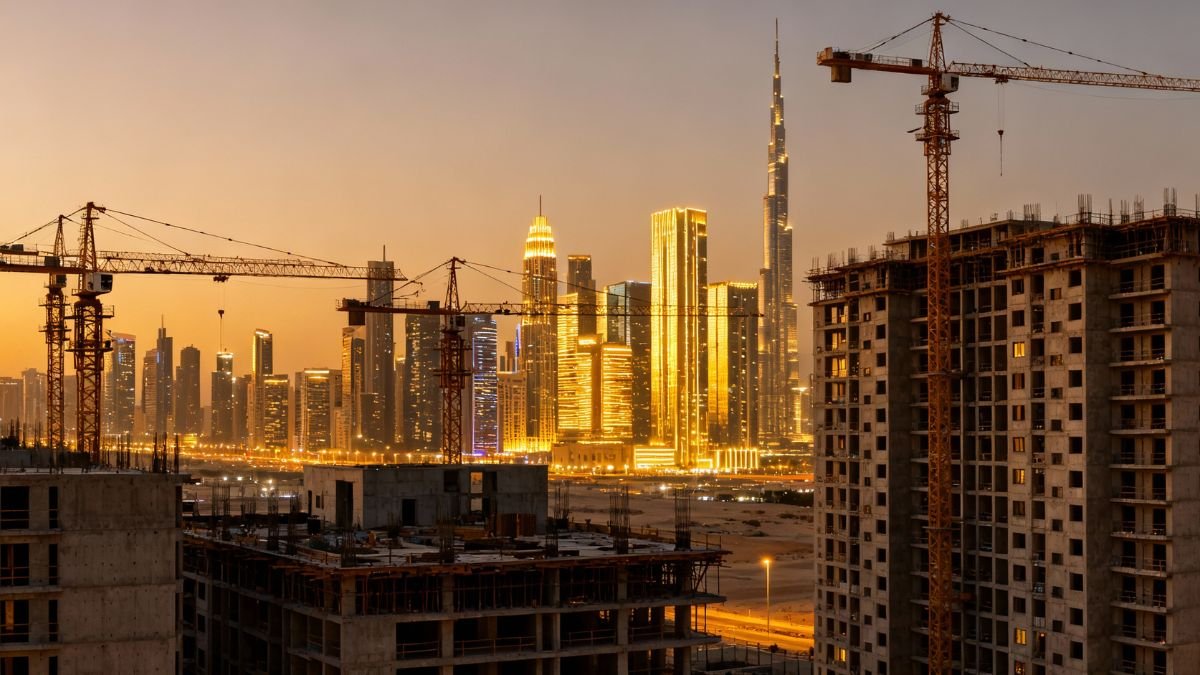
Dubai, UAE — Dubai’s off-plan housing market is entering a sharper, more polarised phase as developers push launch prices and aggressive payment plans to new highs, even as some investors question whether returns still justify the risk.
Analysts say the boom in new launches is being fuelled by record transaction volumes, deep demand from global and regional buyers, and limited ready supply – but warn that steep premiums over secondary-market values and back-loaded payment schedules could leave highly leveraged buyers exposed if sentiment turns.
Off-Plan Dominates A Record Market
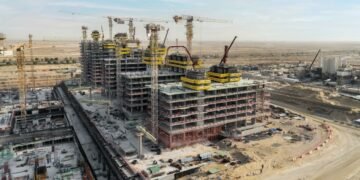
Off-plan projects now account for the clear majority of residential sales in Dubai, underscoring the scale of the shift away from ready units.
Knight Frank’s Dubai Residential Market Review reports that in Q3 2024, off-plan deals made up about 71% of all home sales by number and 72% by value, with off-plan transaction value reaching roughly AED 86.4 billion in that quarter alone. Zawya has similarly highlighted that off-plan sales in early 2025 represented more than 70% of property transactions, reflecting sustained investor appetite for new-build projects across master communities such as Mohammed Bin Rashid City and Dubai Hills Estate.
Also read: How Investors Can Avoid Off-Plan Purchase Mistakes In Dubai’s Real Estate Market
Dubai Land Department figures show that total real estate transactions reached around AED 761 billion in 2024, another record year for the emirate’s property sector. A separate market review notes that residential transaction volumes surged to more than 125,000 deals in the first nine months of 2024, up about 36% year on year, with off-plan sales recording growth of around 50% over the same period.
Rising Launch Prices And Premiums
Against that backdrop, anecdotal complaints from investors about launch prices being 20% above nearby ready stock reflect a broader trend of price inflation in the primary market.
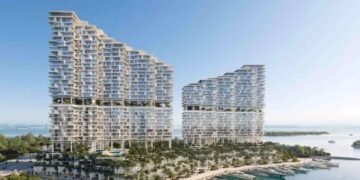
Private market research indicates that off-plan apartments in several prime and emerging districts are now routinely launching at double-digit premiums to comparable secondary stock, particularly at the luxury and branded-residence end of the market.
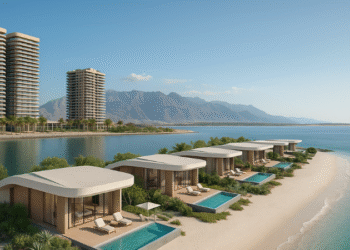
Ultra-luxury developments – including palace-branded residences and waterfront villas – have seen some of the steepest price gains, with Zawya reporting that sales above AED 10 million rose by more than 20% and that prime sub-markets like Dubai Hills Estate registered double-digit price growth in 2024. In such projects, buyers are often paying not only for location and amenities but also for brand equity and lifestyle positioning, which can amplify both upside and downside in a cyclical market.
Payment Plans Get More Aggressive
Alongside higher ticket prices, developers have been rolling out more aggressive payment structures, including 80/20 and 90/10 plans where most of the price is paid during construction and a smaller tranche on handover.
Engel & Völkers Middle East notes that flexible financing and developer incentives are a central pillar of the current off-plan boom, helping absorb new supply as off-plan sales jumped to around 63% of all property transactions in 2024, up from 54% a year earlier. Zawya has also flagged that back-loaded plans can create cash-flow stress for buyers if project timelines accelerate or if capital markets tighten, especially for investors who intended to flip units before completion.
Also read: Dubai Real Estate Sales Climb 15% in August, Off-plan Market Drives Growth
Market commentators point out that early handovers, while positive from a deliverability perspective, can catch leveraged buyers off guard if they have not provisioned for faster-than-expected payment calls, potentially leading to distressed resales. Such dynamics are already visible in some sub-markets where off-plan resale listings have increased, particularly for units launched at the height of the 2023–2024 hype cycle.
Expert Views On Sustainability
The core question for many investors is whether current off-plan pricing and payment structures are sustainable if global liquidity eases or if Dubai supply ramps up more quickly than expected.
Knight Frank’s report cautions that while demand remains robust, the growing dominance of off-plan transactions and the divergence between off-plan and secondary prices warrant close monitoring as a potential source of volatility. Commenting on the wider market, a senior Knight Frank researcher said in the Q3 2024 review that the strength of the off-plan segment is “fundamentally underpinned by Dubai’s economic growth and population dynamics, but pockets of speculative behaviour are beginning to re-emerge in certain luxury projects.”
In a recent Zawya interview, Engel & Völkers Middle East CEO Daniel Hadi argued that the dominance of off-plan sales reflects a “clear shift in buyer preferences, with investors looking for properties that offer long-term value and flexible financing options,” adding that government initiatives such as long-term visas continue to underpin demand from high-net-worth individuals. However, he also emphasised that buyers “need to focus on fundamentals – location, developer track record and realistic exit assumptions – rather than chasing quick gains.”
Indian Investors’ Growing Role
Indian buyers are a critical part of the demand story, both in off-plan and ready segments, and their behaviour will shape how the market digests higher launch prices.
According to analysis referencing Dubai Land Department data, Indian nationals accounted for more than 22% of foreign real estate transactions in 2024 and invested over AED 35 billion in Dubai property, making them the largest single foreign buyer group by value. Another industry report notes that between 2015 and 2021, Indian investors acquired properties worth about AED 84 billion, while in 2022 alone they purchased more than USD 4 billion of Dubai real estate.
Advisers say Indian investors are attracted by rental yields typically in the 5–7% range, the absence of recurring property taxes, and Dubai’s role as a regional hub with strong connectivity to Indian cities. Many are also using property acquisitions as part of broader wealth diversification strategies, often combining end-user purchases with pure investment units across both off-plan and secondary stock.
Discover more from Invest Dubai Today - Dubai Realty Insights
Subscribe to get the latest posts sent to your email.