

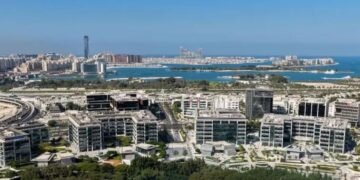

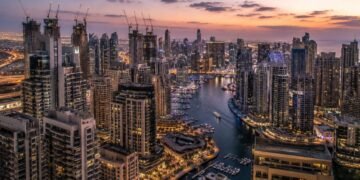
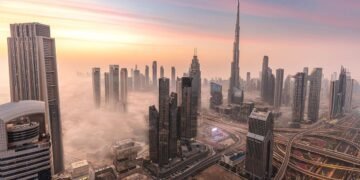






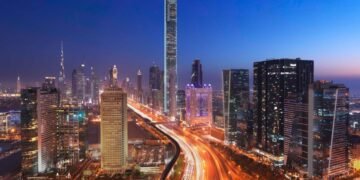
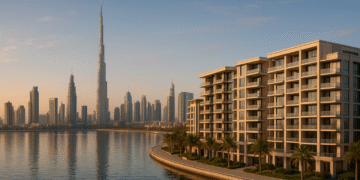
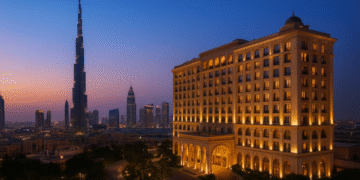


Dubai, UAE — The Dubai land market 2025 continued its upward trajectory, with 4,466 plots changing hands for a combined Dh128.5 billion, according to data from Dubai Land Department (DLD). Transaction value grew 10.4% year-on-year, reinforcing land as one of the strongest-performing asset classes in the emirate’s real estate cycle.
Among active participants, Zabadani Real Estate reported six land transactions in 2025 worth Dh3 billion, up from four deals totaling Dh1.2 billion the previous year. One of the firm’s largest transactions was the sale of a Motor City plot valued at Dh700 million.
While brokerage activity highlights liquidity depth, broader data suggests that Dubai’s land market is experiencing structural repricing rather than cyclical fluctuation.
Multi-Year Appreciation Gains Momentum
According to JLL’s report, Beyond the Skyline: Dubai’s Land Market Transformation Story, land transaction values surged 403.6% between 2019 and 2024. During that period, values climbed from Dh13.7 billion to Dh68.8 billion, while transaction volumes nearly tripled from 691 to 1,991 deals.
Momentum carried into 2025, with Dh43 billion worth of transactions recorded in the first half alone — a 42.9% year-on-year increase.
Also read: From Blue Zones to Dubai: Wellness-Led Design Shapes Luxury Real Estate
The scale of appreciation reflects sustained demand linked to demographic expansion, infrastructure deployment and regulatory clarity. Unlike prior cycles characterised by speculative flipping, current pricing appears increasingly tied to development feasibility, planning certainty and long-term capital positioning.
Migration and Wealth Inflows Reshape Demand
A central driver of the Dubai land market 2025 has been population growth anchored in expatriate migration and high-net-worth individual (HNWI) relocation.
JLL noted that recent demographic shifts are less dependent on organic growth and more influenced by global capital flows, corporate relocations and international professionals seeking alternative residency bases.
This pattern has reshaped land demand dynamics. Newly announced districts often experience price escalation even before vertical development begins, reflecting anticipatory investment behaviour.
Dubai Creek Harbour, for example, recorded land value appreciation exceeding 80% following launch announcements, underscoring how infrastructure-led planning can rapidly alter price benchmarks.
Infrastructure as Value Catalyst
Dubai’s land cycle is closely tied to infrastructure deployment. The Dubai Government allocated Dh39 billion — 46% of its 2025 budget — to infrastructure and construction projects, reinforcing the strategic alignment between public investment and private land acquisition.
Transportation connectivity, utilities expansion and master-planned district announcements serve as measurable catalysts for land appreciation. In this context, land is increasingly viewed as an infrastructure-backed asset rather than purely speculative inventory.
Also read: Azizi Updates Burj Azizi Pricing as Ultra-Tall Supply Expands
Anil Gehani, Founder and Managing Director of Zabadani Real Estate, pointed to a landmark transaction in Al Jadaf priced at approximately Dh1,700 per square foot without freehold conversion. “The pricing reflects pure land value, not enhanced by ownership restructuring or speculative entitlement upside,” he said, suggesting that valuations are now anchored in development fundamentals.
Concentration in High-Growth Districts
The largest transaction recorded by Zabadani in 2025 — a Dh700 million plot in Motor City — illustrates how mid-market districts are also participating in the broader repricing cycle.
Motor City and Al Jadaf, while not traditionally positioned as ultra-prime, have benefited from enhanced connectivity and surrounding infrastructure upgrades. Their pricing evolution signals that appreciation is no longer confined to central business districts alone.
However, pricing velocity varies by location. Established central districts continue to command premiums due to limited supply, while emerging zones experience sharper percentage gains tied to masterplan announcements.
Risk Considerations and Outlook
Despite strong fundamentals, sustained land appreciation carries inherent risks. Rapid price escalation can compress developer margins, particularly if construction costs rise simultaneously. Overvaluation in newly announced districts may also test absorption rates if supply materialises faster than demand.
Global macroeconomic conditions remain another variable. Dubai’s land cycle is partly linked to international capital flows and corporate migration trends, both of which can shift with geopolitical or financial market volatility.
Nevertheless, the convergence of infrastructure spending, regulatory transparency and sustained demographic growth continues to underpin demand for strategic land parcels.
The Dubai land market 2025 reflects an asset class transitioning into institutional depth, where pricing increasingly correlates with urban planning clarity and long-term development potential rather than short-term speculation.
As the emirate advances new masterplans and connectivity projects, land is likely to remain a focal point of capital allocation — though disciplined acquisition and feasibility assessment will be critical as valuations continue to rise.
Discover more from Invest Dubai Today - Dubai Realty Insights
Subscribe to get the latest posts sent to your email.