














Dubai, UAE — Avenew Development has formed a strategic joint venture with Kora Properties to deliver a new Motor City commercial district Dubai, marking a notable expansion of Grade A office supply outside the emirate’s traditional central business hubs.
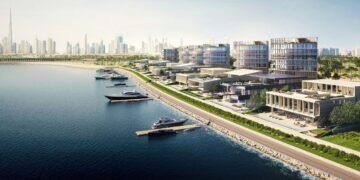
The partnership’s first project will be developed on a prime plot adjacent to the Dubai Autodrome in Motor City and will comprise six Grade A office buildings, a hospital and an integrated retail mall. The scheme is positioned as a mixed-use commercial cluster designed to operate as a self-sustaining business and lifestyle environment.
The project signals growing investor confidence in decentralised office locations as demand for quality commercial stock continues to outpace supply in core districts such as DIFC and Downtown Dubai.
Expanding the Commercial Map
Motor City has historically been known as a residential and leisure-focused district. However, its strategic connectivity to Sheikh Mohammed bin Zayed Road and proximity to established communities has increased its appeal as a secondary commercial node.
Also read: Dubai Land Market Hits Dh128.5B as Infrastructure Spend Fuels Price Surge
With rental growth accelerating in Dubai’s prime office districts, developers are increasingly exploring suburban hubs capable of supporting corporate tenants seeking lower density, improved accessibility and integrated amenities.
The planned Motor City commercial district Dubai aims to respond to these dynamics by combining office space with healthcare and retail components. Such mixed-use clustering is increasingly seen as a means of enhancing tenant retention by reducing commuting friction and improving work-life integration.
Grade A Supply Beyond the CBD
Dubai’s office market has experienced a strong recovery over the past two years, driven by business formation, international corporate relocation and sustained economic expansion. However, Grade A availability remains constrained in key central zones.
The introduction of six new office buildings in Motor City represents an attempt to diversify the geographic distribution of high-quality stock. By integrating landscaped public spaces and pedestrian-friendly design, the development seeks to position itself as a lower-density alternative to congested CBD environments.
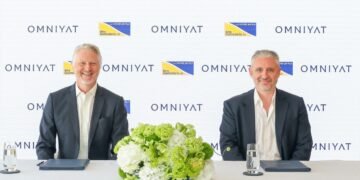
Rasha Hassan, Managing Partner of Avenew Development, said the partnership aligns design philosophy with operational capability. “This partnership represents an important step in Avenew’s growth, allowing us to expand our presence in the commercial sector while staying true to our core philosophy of intentional development,” she noted.
Her remarks reflect a broader industry trend in which design-led commercial environments are increasingly marketed as productivity-enhancing ecosystems rather than standalone office towers.
Institutional Backing and Execution Capacity
Kora Properties brings backing from Appcorp Holding, a regional conglomerate with diversified business interests. Institutional support is often critical for large-scale commercial developments, particularly given extended construction timelines and tenant pre-leasing cycles.
Also read: Dubai Off-Plan Vs Ready Market Split Week 7 Tilts on Mega Deals
Nilesh Ved, Chairman of Appcorp Holding and Kora Properties, said the project is intended to deliver “commercially resilient destinations” aligned with Dubai’s long-term growth ambitions.
The presence of a hospital within the masterplan further differentiates the project from conventional office clusters. Healthcare integration may serve both occupational wellness objectives and commercial demand from medical operators seeking proximity to corporate populations.
Market Context and Risk Considerations
The Motor City commercial district Dubai enters a market that is currently supply-constrained but evolving. Approximately 300,000 sq m of office space is expected to be delivered across Dubai in 2026, although historical completion rates suggest that actual supply may fall short of initial projections.
If multiple decentralised office hubs launch simultaneously, absorption rates could vary significantly by location. Tenant migration from core districts will depend on rental competitiveness, transport connectivity and perceived prestige.
Additionally, mixed-use developments require careful phasing to ensure that retail and healthcare components achieve viable occupancy levels alongside office leasing.
Nevertheless, the strategic shift toward suburban Grade A clusters reflects a maturing commercial ecosystem. As Dubai’s population expands and business districts decentralise, new hubs such as Motor City may play a complementary role alongside established centres.
Long-Term Urban Implications
The launch of a Motor City commercial district Dubai underscores a broader transformation in how office environments are conceptualised within the emirate. Rather than concentrating supply exclusively within central towers, developers are increasingly experimenting with distributed business districts that integrate lifestyle infrastructure.
If successfully executed, such projects could reduce congestion pressures in the CBD while creating new economic nodes across Dubai’s growth corridors.
For now, the joint venture between Avenew and Kora represents a calculated move into a secondary location at a time when Grade A supply remains limited. The project’s performance will ultimately depend on delivery timelines, tenant demand and broader commercial market conditions over the next several years.
Discover more from Invest Dubai Today - Dubai Realty Insights
Subscribe to get the latest posts sent to your email.