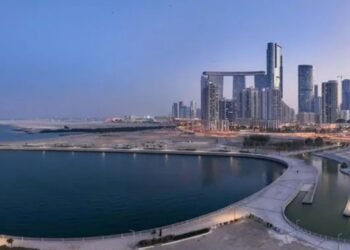
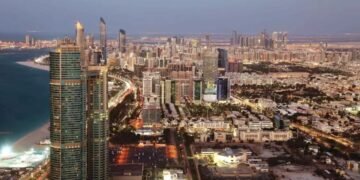

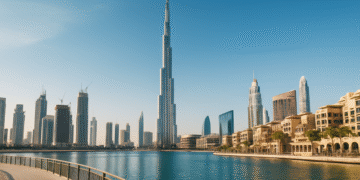
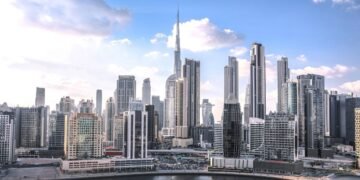






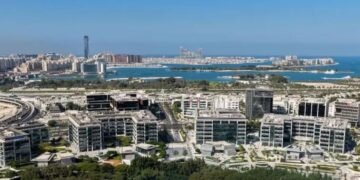


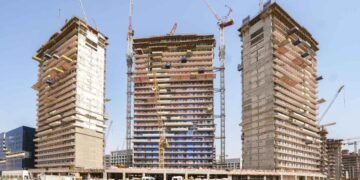








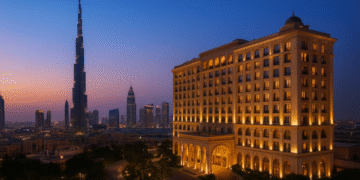
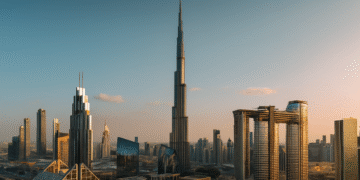



Dubai, UAE — As Dubai enters a heavier delivery cycle in 2026, investor attention is shifting from headline luxury pricing to where new waterfront supply is emerging and how it is being absorbed. Dubai Maritime City, long positioned as a mixed-use maritime hub, is now seeing residential launches that test demand depth beyond established prime waterfront districts.
The relevance for investors is not aspirational pricing, but whether Dubai Maritime City waterfront supply can convert affordability, payment flexibility, and location into sustained end-user and investor demand without replicating oversupply risks seen in earlier cycles.
What Happened
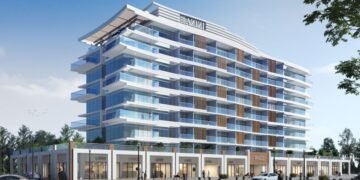
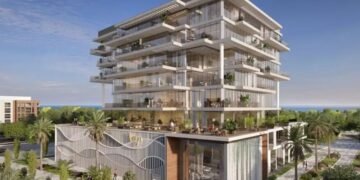
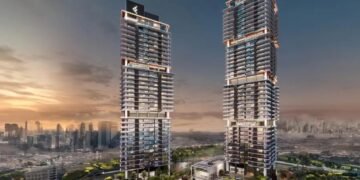
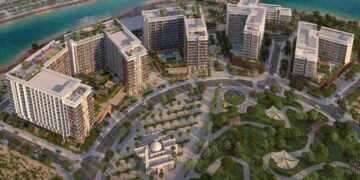
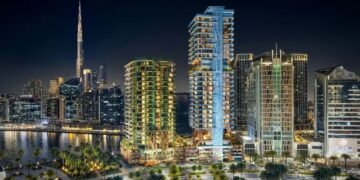
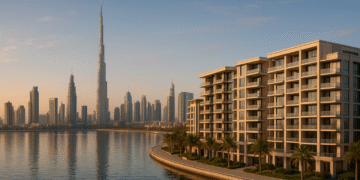
Danube Properties has announced Breez by Danube, a residential project located within Dubai Maritime City, positioning it as part of the area’s expanding waterfront housing inventory. The development includes a mix of studios to larger-format apartments and penthouses, with units offered as fully furnished and supported by extended payment structures, the developer said.
Also read: BEYOND Developments Launches Kanyon, a AED 1.5 Billion Tower at Dubai Maritime City
The project is being marketed against historical performance benchmarks from established waterfront districts such as Palm Jumeirah and Bluewaters Island, which have seen long-term price appreciation driven by constrained supply and mature infrastructure.
Waterfront Supply is Expanding Beyond Prime Districts
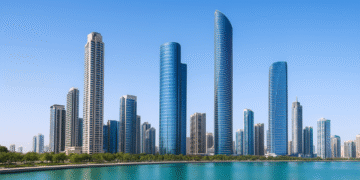
Dubai’s waterfront residential market has historically been dominated by tightly controlled zones such as Palm Jumeirah, Bluewaters, and select areas of Dubai Marina. These locations benefited from early master planning, limited future supply, and strong international demand.
Dubai Maritime City represents a different phase of waterfront expansion. The area sits closer to Dubai’s traditional commercial core and logistics corridors, and its residential pipeline is emerging alongside ongoing infrastructure repositioning rather than after full maturity.
Market data tracked by platforms such as DXB Interact and Bayut shows that while transaction values in established waterfront districts remain high, newer waterfront supply zones are increasingly competing on entry pricing and payment structure rather than scarcity alone.
Commenting on the project, Rizwan Sajan, Founder & Chairman of Danube Group, said:
“With Breez by Danube, we are offering an opportunity to invest in a luxury waterfront residence at an unbeatable price. It is perfectly positioned to enable real estate ownership through our signature 1% payment plan, zero interest charges, and fully furnished apartments. Breez represents a chance to own a piece of Dubai’s future, where demand for prime waterfront properties is set to continue rising.”
Demand Logic Over Headline Returns
From an investor perspective, the question is not whether waterfront properties can perform over long periods, but how entry timing and supply volume influence near- to mid-term outcomes.
Also read: KORA Properties Unveils Dubai Maritime City Luxury Apartments Il Vento
Dubai Maritime City waterfront supply is currently positioned at a lower entry threshold than legacy prime waterfront zones. This widens the buyer pool to include mid-market investors and end users who were previously priced out of established districts.
However, this also means performance will be more sensitive to execution quality, service charges, leasing depth, and broader rental absorption across nearby employment hubs. Unlike Palm Jumeirah, where scarcity alone supports pricing, newer waterfront zones must rely on occupier demand and infrastructure delivery.
For Indian and NRI investors, currency arbitrage and lower ticket sizes may improve entry feasibility, but exit liquidity is likely to be more dependent on market cycles than on trophy-asset positioning.
From a market perspective, such payment-led strategies have become increasingly common across off-plan launches in 2025 and 2026, particularly in districts where developers are prioritising absorption velocity over price maximisation.
Off-Plan Dominance Continues
Dubai’s residential market remains heavily skewed toward off-plan transactions, with investor appetite supported by structured payment plans and phased delivery visibility. Waterfront developments outside established prime zones are a natural extension of this trend, allowing developers to test demand elasticity.
However, analysts at CBRE and Knight Frank have consistently noted that off-plan heavy submarkets require disciplined launch pacing to avoid rental and resale pressure once multiple projects complete within the same timeframe.
Dubai Maritime City waterfront supply will therefore be assessed not in isolation, but against the volume of units scheduled to hand over across adjacent coastal and near-coastal zones over the next three to five years.
Risk and Constraint
The primary risk for investors is supply concentration. Unlike Palm Jumeirah, where new inventory is structurally limited, Dubai Maritime City still has visible development headroom.
Also read: LIV Developers to Deliver AED 2.3 Billion Homes Across Dubai by 2026
Rental performance will depend on how quickly the area establishes itself as a lived-in community rather than a speculative holding zone. Service charge sustainability and tenant depth will be key variables once projects move from handover to stabilisation.
What To Watch Next
Investors should monitor infrastructure sequencing, leasing traction post-handover, and whether Dubai Maritime City develops a distinct residential identity separate from adjacent port and industrial functions.
Transaction mix—end users versus short-term investors—will be an early indicator of whether Dubai Maritime City waterfront supply is maturing into a stable residential submarket or remaining primarily a price-led off-plan play.
For investors, Dubai Maritime City represents a pricing-accessible waterfront thesis, but one that carries higher execution and absorption sensitivity than established prime districts. Returns, if any, will be driven by delivery discipline rather than scarcity alone.
For end users, the appeal lies in entry affordability and proximity to central Dubai, though community maturity will take time.
For Indian and NRI buyers, the segment offers a lower-ticket waterfront entry point, but decisions should be anchored in holding horizon, leasing depth, and service-cost realism rather than long-term appreciation narratives alone.
Discover more from Invest Dubai Today - Dubai Realty Insights
Subscribe to get the latest posts sent to your email.