


















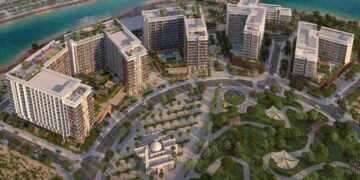









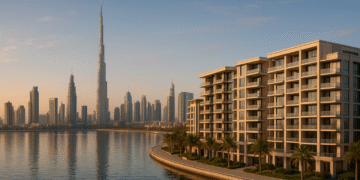





Dubai, UAE — Dubai’s Jumeirah Village Circle continues to transition from a launch-heavy off-plan market into a delivery- and execution-led residential district, as developers move more projects from planning into active construction. The start of works at Avana Residences adds to this shift, highlighting how mid-market communities are absorbing new supply through phased, amenity-driven developments rather than large-scale master plans.
The expansion of the JVC residential construction pipeline is closely watched by investors and end-users alike, as the district balances affordability, rental demand, and rising competition from newer growth corridors across Dubai.
Construction Moves from Planning to Execution
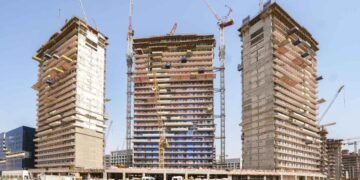
Deca Properties said it has commenced piling works and construction activity at Avana Residences following an on-site groundbreaking ceremony earlier this month. Construction contracts are now in place, marking the project’s transition from approvals into physical delivery.
Also read: STAX Launch Signals JVC Off-Plan Momentum
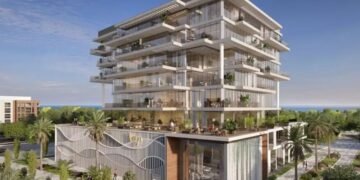
The development is located within Jumeirah Village Circle and comprises studios, one-bedroom, and two-bedroom apartments. Completion is scheduled for the fourth quarter of 2027, according to the developer.
In a market where buyers have become increasingly sensitive to delivery timelines, early-stage construction activity is emerging as a key credibility signal, particularly in mid-market districts where multiple projects often compete for the same tenant and buyer pool.
JVC’s Role in Dubai’s Mid-Market Supply Cycle
JVC has evolved into one of Dubai’s most active residential sub-markets by transaction volume, driven by relatively accessible pricing, central connectivity, and sustained rental demand. Market data from platforms such as DXB Interact and Bayut consistently shows the area ranking among the top districts for apartment sales and leasing activity.
The steady expansion of the JVC residential construction pipeline reflects this demand, but it also raises questions around future absorption as more projects approach handover between 2026 and 2028. Analysts note that while rental demand remains firm, pricing power is increasingly tied to build quality, unit efficiency, and amenity usability rather than headline branding.
Project Positioning Focuses on Usability Over Scale
Avana Residences has been positioned as a wellness-led, amenity-driven project, a theme that has gained traction across Dubai’s mid-market segment as developers seek differentiation without pushing pricing into premium territory.
According to the developer, the project prioritises functional layouts, natural light, and durable material selections, with apartments designed to support long-term residential use rather than short-term speculative turnover. This approach aligns with broader shifts in buyer behaviour, where end-users and long-term landlords are prioritising liveability and operating efficiency.
Consultant-Led Execution as a Risk Mitigator
Execution risk remains one of the primary concerns in mid-sized residential developments, particularly in districts with dense launch pipelines. Deca Properties has appointed Federal Engineering Consultants as master consultant and architectural advisor, tasking the firm with architectural coordination, engineering design, and regulatory compliance throughout the development lifecycle.
Also read: JVC Oversupply Risk: Are 30,000 New Homes About to Flood Dubai’s Market?
The involvement of established consultants is often viewed by investors as a mitigating factor in markets where delays and design revisions can materially affect delivery timelines and resale values.
Interior design is being handled by Aviva Collective Design House, led by Dara Young, with the developer stating that the design direction emphasises functionality, neutral palettes, and practical material choices suited to everyday residential use.
Amenities as an Extension of Living Space
Amenities at Avana Residences are positioned as core components of the project rather than secondary features. Planned facilities include a rooftop swimming pool, fitness centre, yoga and meditation deck, padel court, landscaped social spaces, and a children’s play area.
In JVC, where rental competition is intensifying, amenity relevance has become a key differentiator. Market participants note that developments offering usable outdoor and wellness spaces tend to perform more consistently in leasing markets, particularly among young families and professionals.
Additional features such as an attended lobby, concierge and security services, and electric vehicle charging infrastructure reflect growing expectations around convenience and sustainability in newer residential stock.
Demand, Yield, And Timing
For investors, particularly Indian and NRI buyers, JVC continues to offer relatively low entry points compared with central Dubai locations, while still delivering competitive rental yields. Currency stability against the dirham and the district’s broad tenant base have supported cross-border interest.
However, the expanding JVC residential construction pipeline also introduces timing considerations. Projects delivering into a clustered handover window may face initial leasing pressure, especially if multiple comparable units enter the market simultaneously. Investors are therefore increasingly focused on construction progress, handover phasing, and realistic completion schedules.
What To Watch Next
Key indicators to monitor include construction milestones through 2025 and 2026, the pace of new launches within JVC, and rental absorption as supply builds. The performance of projects like Avana Residences will ultimately hinge on execution discipline, build quality, and how well amenity offerings translate into sustained occupancy rather than short-term demand spikes.
The start of construction at Avana Residences underscores how JVC is moving deeper into an execution-led phase of its growth cycle. For investors, the opportunity lies in selectively backing projects with visible construction progress and practical layouts rather than headline concepts alone. End-users benefit from increasing choice and improving quality benchmarks, while Indian and NRI buyers must weigh entry timing carefully as supply rises. In this phase of the cycle, delivery consistency — not launch velocity — will define long-term outcomes.
Discover more from Invest Dubai Today - Dubai Realty Insights
Subscribe to get the latest posts sent to your email.