




















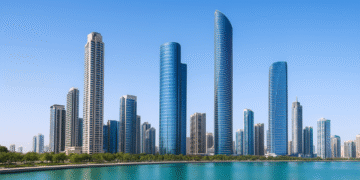

















Dubai, UAE – In the heart of the Middle East’s fastest-growing real estate market, proptech innovations reshape Dubai real estate is no longer a mantra—it is a tangible shift. As digital technologies, smart platforms and new regulatory frameworks converge, Dubai is recalibrating how properties are developed, marketed and invested in—and that carries implications for Indian investors seeking exposure to the emirate’s dynamic market.
Digital at the Core of the Real Estate Cycle
The Dubai Land Department (DLD) has taken bold steps to embed technology at the foundation of the property sector. One of the most significant moves is its real-estate tokenisation initiative, which “enables fractional ownership, expands access and helps future-proof the real-estate market” via blockchain. Meanwhile, the Dubai Integrated Economic Zones Authority (DIEZ) and DLD inked a partnership aimed at building a strong start-up ecosystem for property technology. “We are committed to providing a conducive environment that encourages the adoption of modern technologies, such as artificial intelligence and blockchain, in the real-estate sector,” said Marwan Ahmed bin Ghalita, Director-General of DLD.
Thanks to these efforts, the UAE proptech ecosystem is burgeoning. One recent analysis notes that the UAE’s proptech market size was estimated at US $607 million in 2024, with a growth trajectory to US $1.55 billion by 2030. According to another article, “In 2024, the global proptech market was valued at USD 36.55 billion, but it is predicted to soar to USD 88.37 billion by 2032.”
A Dedicated Hub for Real Estate Technology
To institutionalise the shift, the Dubai International Financial Centre (DIFC) Innovation Hub and the Dubai Land Department launched the region’s first dedicated PropTech innovation district—known as the Dubai PropTech Hub. The initiative is designed to support over 200 start-ups and scale-ups, generate upwards of 3,000 jobs and attract more than US $300 million in investment by 2030.
Also read: DPrice Introduces AI-Powered Dynamic Pricing in Dubai Real Estate
Essa Kazim, Governor of DIFC, commented: “This landmark initiative … will build renewed momentum for investment … aligning with the Dubai Economic Agenda D33 and the Dubai Real Estate Sector Strategy 2033.” This institutional backing matters for Indian investors, who may view the emirate’s property market as not only fashionable, but also increasingly structured and technology-driven.
What Does This Mean on the Ground?
From a practical standpoint, the infusion of technology is reshaping multiple elements of real estate: sales and marketing, property management, investment structuring, and user-experience.
For instance, platforms powered by AI and proptech are streamlining property search, offering virtual tours, predictive analytics on pricing and demand, and more efficient transaction workflows. A market commentary cited: “In Dubai, this change is even more pronounced… AI now powers everything from predictive analytics on housing demand to chatbots that answer queries about properties in real time.”
Smart-building sensors, digital tenancy management, and blockchain-based transaction recording are also gaining traction. The shift extends beyond new builds: legacy assets and commercial portfolios are being upgraded through technology and data analytics to improve yield and operational efficiency.
Strategic Implications for Indian Investors
Indian investors have long been active in Dubai’s freehold market. With proptech innovations entering the mainstream, a few strategic considerations emerge:
- Fractional Ownership & Tokenisation
The tokenisation initiative by DLD paves the way for fractional ownership models: mid-to-high net-worth Indians may be able to acquire ownership of premium assets at lower ticket sizes. “Streamlined investment… fractional ownership allows investors to acquire shares in premium properties based on their budget and strategy.” - Transparency and Data-Driven Decisions
Enhanced digital platforms yield richer market intelligence. Applying tools built in the proptech ecosystem helps in assessing neighbourhood dynamics, valuation trends and risk metrics. As noted in a PropTech commentary: “Dubai is rapidly emerging as a powerhouse … creating companies that can lead in technology, which can then be adopted globally.” - Operational Efficiency and Yield Management
For investors holding rental or commercial portfolios, the adoption of proptech means improved asset-management workflows—higher retention, smarter maintenance, dynamic pricing—all of which contribute to net yield improvement. - Entry Timing in a Maturing Market
While technology supports better decision-making, macro fundamentals still matter. Reports by ValuStrat show continued capital gains across villa and apartment segments, though supply build-up is moderating growth (villa values up ~180% since 2021, for example). For Indian investors, this suggests timing matters: early adoption of proptech-enabled assets may offer upside, but discipline on valuation and location remains key.
Market Risks and Technological Headwinds
Despite the momentum, the acceleration of proptech does not insulate the real estate market from broader risks. According to several industry sources, challenges may include integration cost, regulatory complexity around tokenisation, data governance, cybersecurity, and consistent user-adoption across the value chain. For example, a commentator warns: “Contracts that used to crawl through approvals can be automated. … But cybersecurity is one of the wrinkles.”
Also read: Property Finder Invests in Stake to Accelerate Real Estate Tech Growth
Moreover, global underlying macro conditions—interest rates, migration trends, oversupply—remain material. Technology is a facilitator, not a panacea.
Outlook: Proptech As Enabler of Next Growth Phase
In sum, proptech innovations reshape Dubai real estate is more than a slogan—it is reinforcing Dubai’s ambition to become a global hub for property-technology, backed by government strategy (Dubai Economic Agenda D33; Real Estate Sector Strategy 2033) and strong execution.
For Indian investors: the main takeaway is that technology is lowering barriers, enhancing transparency and potentially unlocking alternative entry routes (e.g., fractional ownership). The key will be careful asset selection, use of technology-enabled platforms that deliver real value, and staying aligned with Dubai’s evolving regulatory and infrastructure environment.
Dubai’s property market has entered a new era—one where bricks update to bytes, walls to dashboards, and ownership to tokens. Technology is not replacing fundamentals; rather it is amplifying them. For investors who can navigate both asset-class logic and tech-driven enablers, the opportunity is real—but so is the need for discipline.
Discover more from Invest Dubai Today - Dubai Realty Insights
Subscribe to get the latest posts sent to your email.