



















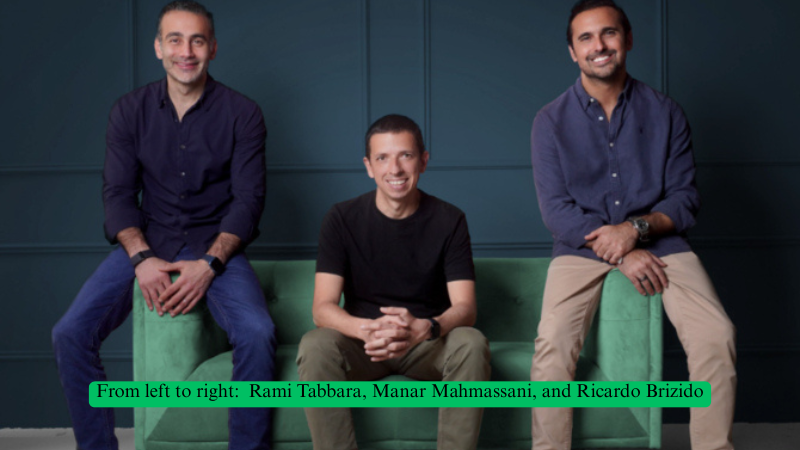
DUBAI, UAE – In a city famed for luxury towers and high-priced property, Stake is quietly revolutionizing home ownership with a simple premise: real estate should be accessible to all. At the core of this vision is a trio of founders whose combined expertise in real estate, finance, and technology is shaping the future of property investing.
From High-End Sales to Digital Platforms
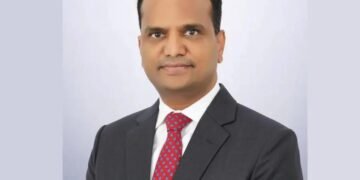
Stake’s journey traces back to the vision of its founders. Rami Tabbara, who spent over a decade in Dubai’s real estate sector, had seen up close how global demand for the city’s property consistently outpaced accessibility. His longtime friend, Manar Mahmassani, brought a deep background in investment banking, where he had structured multi-billion-dollar deals across global markets. Both shared the conviction that Dubai real estate—once the playground of wealthy investors—needed to be opened to a wider audience.
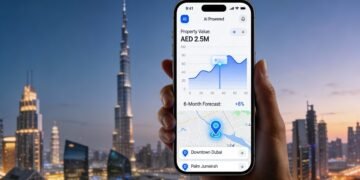
When the COVID-19 pandemic accelerated digital adoption, the two recognized an opportunity to reimagine property investment. They joined forces with Ricardo Brizido, a technology leader with experience building digital platforms in Europe, to create Stake. The startup launched in early 2021 with a simple yet powerful proposition: fractional ownership of Dubai property, accessible through an app, with a minimum entry point of just AED 500.
Building an Accessible Investment Ecosystem
The founders didn’t just bring an app to market—they reimagined real estate investing. Rami describes Stake as “the most advanced real estate platform in the world,” enabling anyone to own a slice of Dubai property in under three minutes. All properties are rigorously vetted, and once fully funded, are purchased via Special Purpose Vehicles registered under DIFC. Investors receive SPV shares and title deeds, while rental income flows directly to their Stake wallets.
Also read: How Nomad Homes Is Disrupting Real Estate in Dubai with Buyer-Centric Technology
Manar, drawing on decades of high-level finance, helped structure the platform’s due-diligence and capital mechanics. Ricardo ensured the technology backbone allowed seamless onboarding, portfolio management, and liquidity via “exit windows.” Their complementary roles enabled Stake to scale fast without sacrificing transparency.
Momentum, Funding, and Expansion
The innovative model of Stake quickly gained traction. Since launch, it has transacted in over 200 properties, accrued more than 100,000 transactions, and garnered a user base spanning over 175 countries.
Institutional confidence followed. After raising $8 million in 2022, Stake secured $14 million in a 2024 Series A round led by MEVP, with backing from Wa’ed Ventures (Aramco) and Mubadala, pushing expansion into Saudi Arabia and Abu Dhabi.
Why Stake Resonates Regionally
Dubai’s property market has become difficult to access for young professionals and global buyers. Stake addresses this by lowering entry to AED 500—unheard of in traditional models. Rami notes customers range from taxi drivers to aircrew, all investing in income-generating properties.
Moreover, by enabling fractional investments across multiple assets, the platform provides diversification and liquidity—features Indian investors, a strong force in Dubai real estate, find especially appealing. They can now build a portfolio with minimal upfront capital while benefiting from rental income and capital growth.
Balancing Vision with Regulation
Based in DIFC and regulated by the DFSA, Stake has also gained an Islamic finance window—making it Shariah-compliant in both the UAE and Saudi Arabia. This positions them to tap into new investor segments while aligning with regional compliance standards.
Despite geopolitical uncertainties, Rami sees sustained resilience:
“If we go back and study the real estate market during all the conflicts… they have benefited Dubai’s market. Dubai is seen as a beacon of stability in the region.”
The road ahead
The evolution of Stake reflects the broader transformation underway in Dubai’s property market — one where technology, regulation, and investor appetite are converging. If successful in scaling its model across the GCC, the company could set a benchmark for how fractional ownership reshapes real estate accessibility.
Also read: Keyper: Reshaping Rent and Real Estate Management in the UAE
As global investors look for stability amid uncertain markets, Dubai’s strong fundamentals combined with Stake’s platform-driven model could unlock a new era for property investment in the region.
Why it matters for Indian investors
For Indian investors — a key segment in Dubai’s property market — Stake’s model provides a low-barrier gateway. Instead of committing millions of rupees upfront, investors can test the waters with smaller amounts, spread risk across multiple properties, and manage holdings entirely online.
With India’s affluent class increasingly exploring Dubai for portfolio diversification, fractional platforms like Stake could become an attractive bridge. The model addresses liquidity concerns while aligning with regulatory frameworks that allow foreign investors to participate in Dubai’s freehold markets.
Discover more from Invest Dubai Today - Dubai Realty Insights
Subscribe to get the latest posts sent to your email.