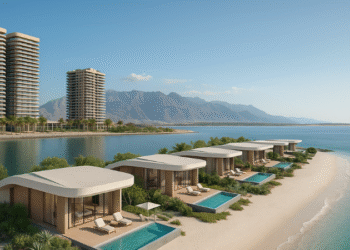



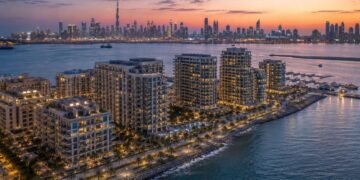
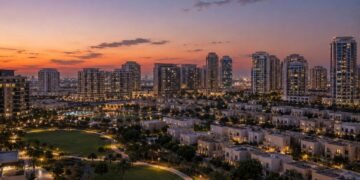
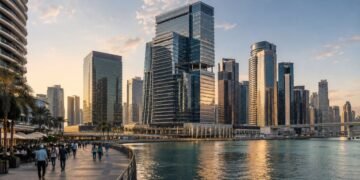

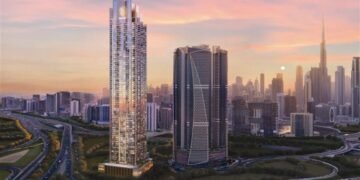


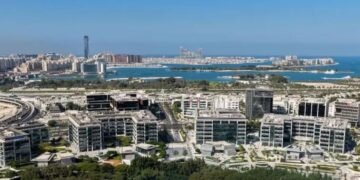

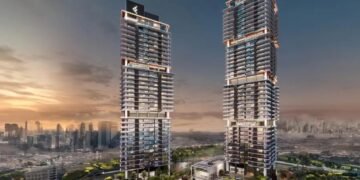
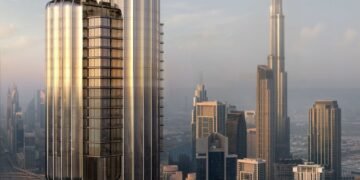
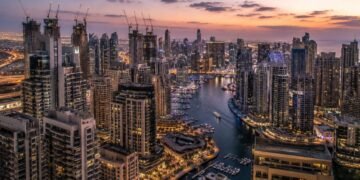

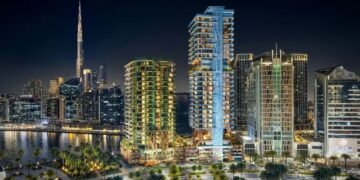

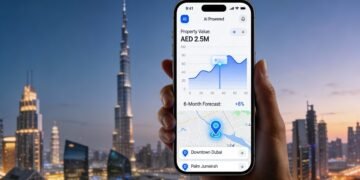




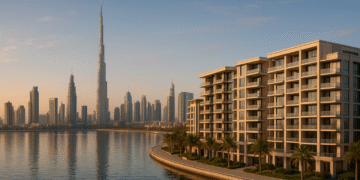


Dubai, UAE – Dubai’s residential market, once synonymous with ultra-prime addresses and speculative investment, is showing signs of a structural shift. The affordable luxury real estate market in Dubai — homes typically priced between AED 1 million and AED 3 million — is now emerging as the engine of demand, driven by end-users and yield-oriented investors rather than short-term speculators.
According to the Dubai Land Department (DLD) data compiled by DXB Interact, the city recorded more than 55,000 residential transactions in the third quarter of 2025, up 18 percent year-on-year, with transaction values surpassing AED 138 billion. Most of these sales occurred in communities offering mid-luxury apartments and townhouses.
Investor Shift From Speculation to Stability
Analysts describe this pivot as a sign of market maturity.
“Buyers are becoming more discerning. The market has moved beyond speculative high-end transactions,” said industry analysts. “We’re seeing end-user demand and genuine occupancy drive volumes.”
Knight Frank’s data shows that residential prices in Dubai rose 3.7 percent quarter-on-quarter in Q1 2025 to reach AED 1,749 per sq ft, a level 17.6 percent higher than the previous market peak in 2014. The report notes that the AED 1–3 million range — effectively the affordable luxury bracket — now accounts for the majority of transaction activity.
Defining the Affordable Luxury Segment
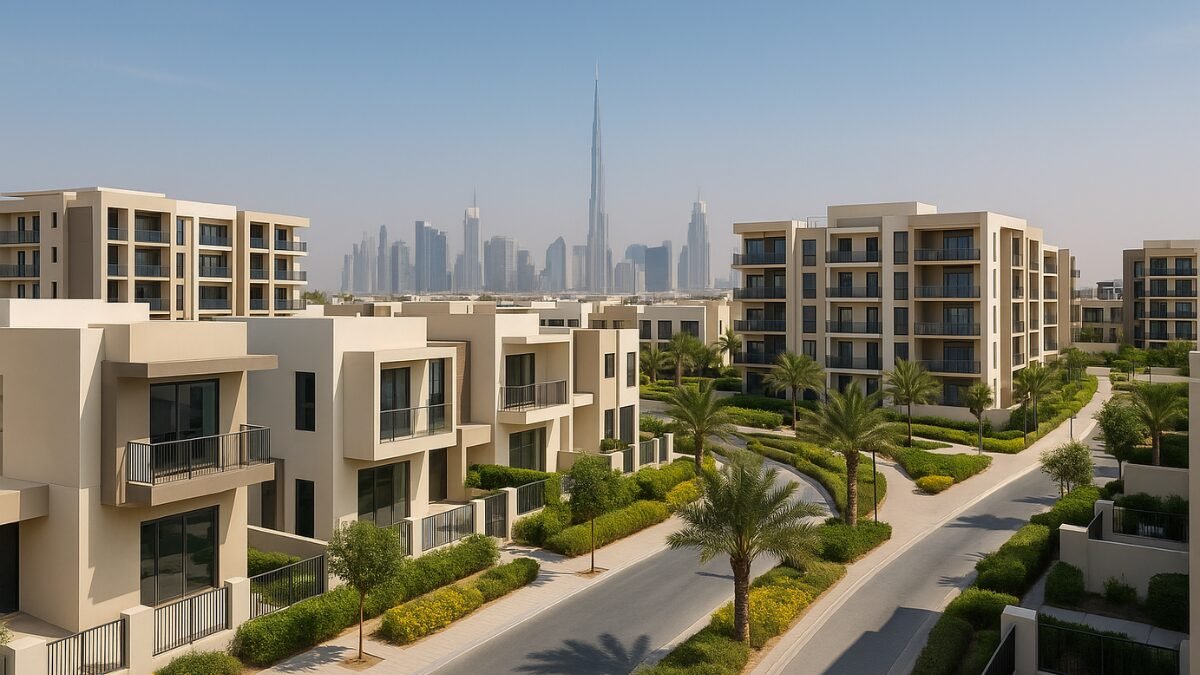
The affordable luxury real estate market in Dubai refers to premium mid-tier housing — projects that offer contemporary design, community amenities and proximity to key highways, but at prices below the city’s super-prime districts.
In its UAE Real Estate Market Review Q2 2025, CBRE reported that average residential prices in Dubai climbed 14.5 percent year-on-year, with villas up 18.3 percent and apartments 12.9 percent. The consultancy highlighted that “emerging suburban communities are absorbing a growing share of new demand as buyers look for affordability without compromising quality.”
Also read: Buying Property In Dubai From Developers Or Agents: A 2025 Market Analysis
Taimur Khan, Head of Research – MENA at CBRE, said in the same report that this tier “provides stability in a market that has otherwise been defined by polarisation between luxury and budget housing.”
Further supporting this trend, the ValuStrat Price Index for Q2 2025 recorded a 23.9 percent annual increase in capital values across Dubai’s residential stock, with mid-priced units showing the strongest resilience. “The mid-market continues to outperform because it caters to genuine housing needs rather than speculative plays,” the report said.
Who’s Buying and Why
Foreign investors remain pivotal to Dubai’s property cycle. Indian nationals ranked among the top three overseas buyer groups in the DLD’s 2025 transaction data, alongside UK and Russian investors.
For many, the affordable luxury bracket offers a balance of price, yield and liquidity. Typical rental returns in these communities range between 5 percent and 7 percent, compared with 3 percent or less in the city’s ultra-prime zones, according to CBRE. These returns, coupled with Dubai’s tax-free structure and streamlined ownership rules, have made mid-luxury developments appealing to cross-border investors.
The attraction is also demographic. Dubai’s working professional and expatriate population continues to expand — a dynamic that supports sustained rental demand in family-friendly, master-planned communities such as Arjan, Dubailand, Jumeirah Village Circle (JVC), and Al Furjan.
Developers Adjust Their Strategy
Developers are pivoting quickly to meet this appetite.
Major players such as Emaar, Damac, and Majid Al Futtaim have rolled out sub-AED 3 million clusters under brands like Emaar South, Damac Lagoons and Tilal Al Ghaf. These projects focus on resort-style amenities — community lakes, schools and retail — packaged for end-user families rather than absentee landlords.
Also read: Understanding Dubai’s No Capital Gains Tax
A CBRE housing-supply tracker shows more than 42,800 units are scheduled for completion across Dubai in 2025, up 42 percent from 2024, with the majority located in suburban growth corridors.
The Cavendish Maxwell H1 2025 Market Performance Report found that about 17,200 new homes were delivered in the first half of 2025, many in mid-priced master communities, reflecting how developers are diversifying portfolios toward steady-demand segments.
Risks Temper Optimism
Despite strong momentum, analysts caution against assuming perpetual appreciation.
A May 2025 report by Fitch Ratings, cited by Reuters, warned that Dubai residential prices could fall 10–15 percent by 2026 as supply outpaces absorption in some zones.
Still, consultancies such as Knight Frank and Deloitte argue that mid-tier housing remains relatively insulated because it serves long-term residents. Deloitte’s Dubai Real Estate Predictions 2025 called the affordable luxury band “the most stable segment of the market, supported by occupancy and consistent rental returns.”
“Even if prime pricing cools, demand for well-located, mid-luxury homes will remain sticky,” said a housing analyst.
Why Indian Investors Are Leading the Shift
For Indian investors, the affordable luxury real estate market in Dubai offers clear advantages over domestic metros.
An AED 2 million townhouse in Dubai equates to roughly INR 45 million — similar to a high-end apartment in Mumbai, but with higher yields, superior finishes, and residency incentives. The UAE’s 10-year Golden Visa remains a magnet for Indian families relocating or seeking dual-residency options linked to property ownership above AED 2 million.
“Even after adjusting for rupee depreciation, Dubai offers better post-tax returns and liquidity than India’s luxury segment,” said Mumbai-based wealth adviser Rakesh Jain, who tracks cross-border property investments for NRI clients.
Outlook: From Trend to Transformation
The momentum behind the affordable luxury real estate market in Dubai looks set to continue into 2026. Rising population, infrastructure expansion — including the Dubai Metro’s extensions and airport-linked developments — and ongoing regulatory clarity are reinforcing confidence.
As one CBRE analyst summarized, “Dubai’s housing market is evolving from a story of prestige to one of practicality. The affordable luxury segment sits exactly at that intersection — combining yield, lifestyle and scale.”
For now, investors appear to agree. The mid-luxury market, once overshadowed by the glitz of super-prime towers, is quietly redefining what sustainable growth in Dubai real estate looks like.
Discover more from Invest Dubai Today - Dubai Realty Insights
Subscribe to get the latest posts sent to your email.