
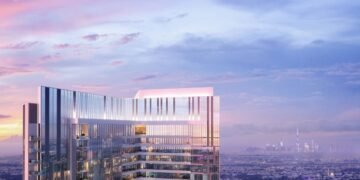

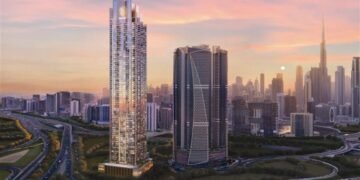
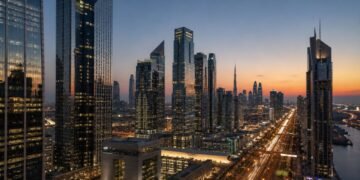
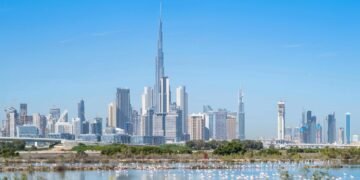
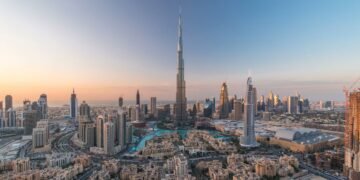
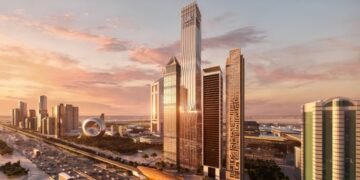
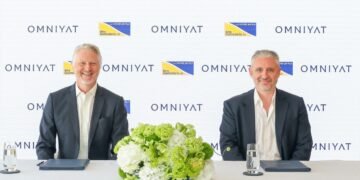
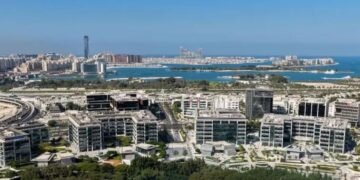

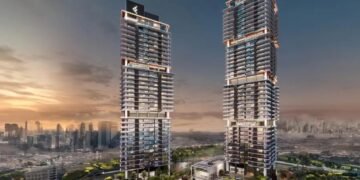
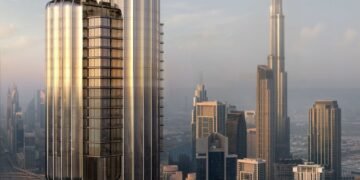







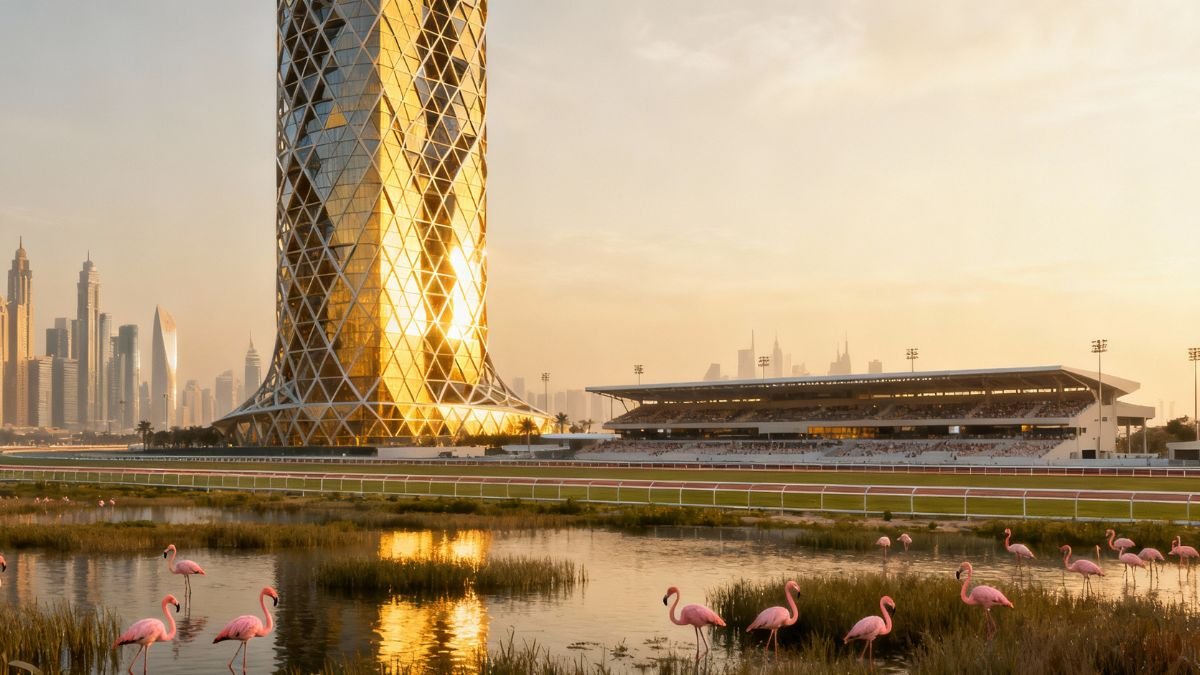
Dubai, UAE — Imtiaz Developments has launched The Symphony Tower, a 42-story residential development designed by UK-based Zaha Hadid Architects, marking the latest high-profile architectural addition to Dubai’s expanding luxury real estate portfolio in the emerging Horizon district between Meydan Racecourse and Ras Al Khor wetlands.
The Symphony Tower launch comes as the emirate’s prime real estate segment records exceptional growth, with Knight Frank data showing prime villa prices increased 94% between Q1 2020 and Q4 2024, while The Wealth Report 2025 documented overall prime property value increases of 147% over five years. Dubai’s H1 2025 residential market recorded 91,900 sales transactions valued at AED 262.1 billion, representing year-on-year increases of 22.9% in volume and 36.4% in value, according to Cavendish Maxwell.
Emirati Heritage Meets Contemporary Design
The Symphony Tower’s architectural concept draws inspiration from Al Sadu and Talli, traditional Emirati crafts involving weaving with metallic threads, according to Zaha Hadid Architects. The tower’s exoskeleton defines an interlaced facade that appears to transform in tone and depth as sunlight shifts throughout the day.
Also read: Dubai Rental Yields 2025: Investment Analysis Reveals Best Value Communities
“A variety of external spaces throughout the skyscraper provide outdoor living areas for each apartment,” Zaha Hadid Architects stated. The interwoven structure determined by the exoskeleton grid creates distinctive rhythm and texture across each facade, emulating the intricate patterning and craftsmanship of traditional Emirati embroidery.
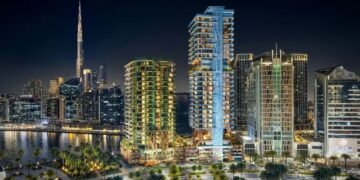
Photovoltaics integrated into the design charge batteries for the tower’s lighting systems, reusing solar energy absorbed during daytime hours to illuminate the three-dimensional lattice of the exoskeleton after sunset. The gentle amber glow expresses the recurring pattern within the structure, echoing geometric reflections from metallic threads within regional embroidery traditions.
Structural Innovation And Environmental Performance
The precision-engineered exoskeleton serves dual structural and environmental functions at this Zaha Hadid Tower Dubai launch. By reducing solar gain through facade shading, the exoskeleton and its terraces shelter outdoor living areas, providing residents with comfortable external spaces throughout much of the year in Dubai’s climate.
Also read: Prescott The Caden Meydan Horizon: AED 650M Lagoon-Front Launch
Sustainability features incorporate modular construction methods, recycled steel, low-carbon concrete, and responsibly sourced finishes to decrease embodied carbon. Water consumption reduction strategies include greywater recycling, low-flow fixtures, and drought-tolerant landscaping.
The development’s positioning in the Horizon district places it adjacent to Ras Al Khor Nature Reserve, a protected wetlands wildlife sanctuary that attracts migratory bird species including flocks of the UAE’s native rose flamingo. The location provides unobstructed views toward both Meydan Racecourse and the natural wetlands environment.
Prime Segment Supply Constraints
The Zaha Hadid Tower Dubai launch addresses documented supply constraints in Dubai’s luxury segment. Knight Frank analysis indicates listings in prime neighborhoods fell sharply over the past 12 months, with available properties in the $10 million-plus segment dropping 65%.
“With limited luxury supply and a rapidly growing population, Dubai’s prime real estate market will see growth in 2025,” The Wealth Report stated. “Listings in prime neighbourhoods have fallen sharply over the past 12 months, with the shortage even more pronounced in the US$10 million+ segment”.
The architectural quality of new Dubai developments has improved substantially due to exceptional property price increases achieved across the emirate, according to Knight Frank. Developers now commission highly skilled architects, employ superior builders and craftsmen, and introduce premium materials.
Off-plan properties dominated Q3 2025 market activity, constituting 73% of transaction volume and 66% of market value, demonstrating sustained investor confidence in Dubai’s development pipeline, according to DXB Interact data reported by Reuters. Apartments led Q3 2025 activity with 49,370 units sold at AED 94.3 billion, marking a 25.9% year-on-year increase.
Developer Portfolio And Market Position
Imtiaz Developments joins an expanding roster of developers partnering with internationally recognized architectural firms to differentiate projects in Dubai’s competitive luxury segment. The Symphony Tower represents the developer’s entry into the Horizon district, a masterplanned community positioning itself as a bridge between established urban areas and natural conservation zones.
Also read: Meriden Beach Residences Joins Dubai Islands Boutique Residential Launch
The tower’s design-forward approach aligns with broader market trends emphasizing architectural distinction and sustainability credentials in premium residential offerings. Dubai’s development pipeline remains substantial, with over 61,800 units currently under construction for delivery throughout 2025, though Cavendish Maxwell notes only 21% of projects scheduled for 2025 completion have reached 75% or more construction progress, indicating potential delivery delays.
Investment Considerations For Indian Buyers
The Symphony Tower holds strategic relevance for Indian investors, who constitute Dubai’s largest foreign buyer demographic. The Zaha Hadid Tower Dubai launch targets the ultra-high-net-worth segment, with pricing expected to reflect the project’s prime positioning, architectural pedigree, and limited luxury supply environment.
Indian buyers increasingly favor Dubai’s prime real estate due to Golden Visa eligibility for investments exceeding AED 2 million (approximately ₹4.6 crore), tax-free rental returns, and extended 10-year residency options. The emirate’s simplified property registration processes through the Dubai Land Department and ongoing infrastructure advancements, including metro expansions, continue supporting international capital inflows.
However, prospective luxury segment buyers should consider Dubai’s substantial supply pipeline, with approximately 200,000 homes expected by 2027. Fitch Ratings projects moderate market correction beginning late 2025 as new unit volumes outpace population growth, though prime areas such as Palm Jumeirah and Downtown Dubai are expected to remain resilient due to desirability and limited supply.
For Indian investors evaluating Dubai’s architectural landmark projects, The Symphony Tower’s combination of Zaha Hadid Architects design pedigree, sustainable construction methodology, strategic Horizon district positioning adjacent to protected wetlands, and entry into the undersupplied ultra-luxury segment presents differentiated value. The 65% decline in available properties above $10 million suggests sustained scarcity in this market tier, supporting price resilience despite broader market supply increases. Indian buyers should verify completion timelines, conduct comparative analysis against established luxury developments in Palm Jumeirah and Dubai Hills Estate, and assess currency hedging strategies given INR volatility against the AED-pegged dirham when structuring acquisitions in this premium segment.
Discover more from Invest Dubai Today - Dubai Realty Insights
Subscribe to get the latest posts sent to your email.