



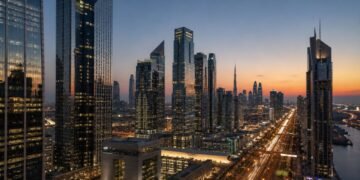
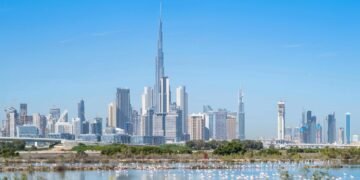
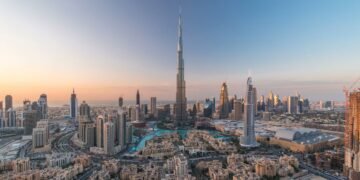


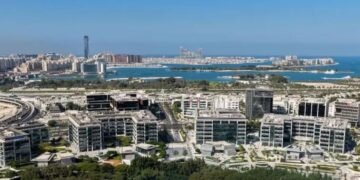










Dubai, UAE — As Dubai’s real estate market heads into a heavier delivery cycle between 2026 and 2028, investor focus is shifting decisively from launch volumes to execution certainty and balance sheet strength. In that context, the latest Binghatti financial results Dubai real estate offer a useful signal of how developer performance is beginning to diverge.
With supply visibility rising and financing conditions tightening globally, developers that can scale while preserving margins and liquidity are increasingly being treated differently by both buyers and capital markets.
Record Earnings as Delivery Accelerates
Binghatti Holding reported net profit of AED 3.58 billion for the year ended 31 December 2025, a 96% increase year-on-year, according to the company. Revenue nearly doubled to AED 12.43 billion from AED 6.34 billion in 2024, supported by strong sales execution and faster project handovers.
Also read: Mercedes-Benz Places Binghatti City Launches in Dubai Meydan
The developer said performance was driven by its diversified portfolio across mainstream, premium mainstream, luxury and ultra-luxury housing, allowing it to capture demand across buyer segments rather than rely on a single price band.
Katralnada BinGhatti, Chief Executive Officer and Managing Director, said the year marked a validation of the group’s operating model.
“The year that just closed presents a defining period of growth for Binghatti and a clear validation of our strategy, execution discipline, and differentiated approach to development.”
Branded Assets Reinforce Pricing Power
Momentum strengthened in the final quarter of 2025, with Binghatti announcing several high-profile developments tied to branded real estate. The launch of Mercedes-Benz Places | Binghatti City marked what the company described as the world’s first Mercedes-Benz branded city.
Also read: Dubai Developer Binghatti Posts Record Profit Amid Market Boom
The group also disclosed the sale of the Middle East’s most expensive residential penthouse, valued at approximately $150 million, underscoring sustained ultra-luxury demand despite broader concerns around global property affordability.
Management said these transactions reflected international buyer confidence in branded, design-led developments with clear service propositions.
Liquidity and Capital Access in Focus
Beyond operating results, balance sheet strength emerged as a defining feature of the year. Cash balances rose to AED 8.84 billion, while total assets increased 92% year-on-year to AED 24.37 billion, according to company disclosures.
Chief Financial Officer Shehzad Janab said profitability remained resilient even as activity scaled rapidly.
“FY2025 was defined by disciplined execution and a resilient operating model that continued to perform even as the business scaled rapidly.”
He added that gross margins stood at 44%, with EBITDA margins at 35% and net margins at 29%, highlighting the impact of vertical integration and cost control.
Capital Markets Validation
Binghatti also strengthened its standing in debt markets during 2025. GlobalCapital named the company’s $500 million sukuk issuance as CEEMEA’s Corporate Deal of the Year, citing five-times oversubscription and tightened pricing.
Also read: Binghatti Prices $500m Oversubscribed Green Sukuk
The sukuk attracted order books of approximately $2.5 billion, with nearly half of allocations coming from outside the GCC—an indicator of growing international institutional appetite for UAE real estate-linked credit.
Earlier in the year, the group also launched its first real estate investment funds through Binghatti Capital, its DIFC-based investment arm, further expanding funding optionality.
Investor Read-Through
For investors, the Binghatti financial results Dubai real estate reinforce a broader market shift: scale alone is no longer sufficient. As delivery volumes rise across Dubai, capital is increasingly flowing toward developers that demonstrate repeat execution, liquidity buffers, and access to diversified funding.
For Indian and NRI buyers in particular, the relevance lies less in short-term appreciation and more in execution visibility. In a supply-rich market, timely completion and resale depth are becoming as important as entry pricing—especially for branded and higher-ticket assets.
Constraints to Monitor
Despite strong results, Binghatti remains exposed to the durability of branded and ultra-luxury demand. Any slowdown in cross-border capital flows or shifts in high-end buyer sentiment could test absorption rates. Maintaining margins at scale will also depend on sustained control over construction costs and delivery timelines as volumes expand.
What Comes Next
Market participants will be watching Binghatti’s 2026 handover schedule, sales velocity as more projects reach completion, and whether the group returns to capital markets amid changing global rate expectations. The performance of branded assets through the next supply cycle will also serve as an indicator for the wider premium segment.
Binghatti’s 2025 performance illustrates how Dubai’s real estate market is entering a phase of sharper differentiation. Developers with execution depth, liquidity, and capital markets credibility are pulling ahead as supply visibility increases. For investors and end-users—particularly Indian and NRI buyers—the results reinforce why balance sheet strength and delivery discipline are becoming central to risk assessment in Dubai’s next real estate cycle.
Discover more from Invest Dubai Today - Dubai Realty Insights
Subscribe to get the latest posts sent to your email.