






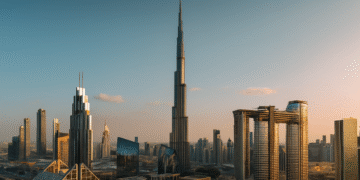



Dubai, UAE — Dubai real estate concluded 2025 as another record-breaking year, with the market heading into 2026 as momentum-driven decisions give way to logic-based buying, while luxury remains the most resilient sector.
In an in-depth market report, fäm Properties says 2026 will be a year that rewards projects and communities offering genuine connectivity, strong fundamentals, credible execution, clear lifestyle, value and true scarcity, while penalizing anything built on hype alone.
The analysis draws on analytics from DXBInteract, which has become the go-to source of market intelligence this year using Dubai Land Department-verified data, highlighting clear trends that defined 2025 and will shape the property sector in 2026.
2025 Key Takeaways
Record-breaking transaction year saw sales hit an all-time high, as 197,263 deals worth AED 624.1 billion (Jan-Nov 2025) eclipsed previous annual records with a month remaining.
Momentum-driven market featured buyer decisions largely fuelled by market momentum rather than deep analysis of fundamentals, developer track record, or long-term usability. Rise of the end-user strengthened materially, particularly among families choosing ownership over rent, adding stability to established and well-serviced communities.
Also read: Dubai Real Estate Q3 2025: Off-Plan Sales EXPLODE – You Won’t Believe the Rent Surge!
Global capital influx brought strong inflows from UHNW individuals and global families, with capital coming from Europe, the UK, CIS, India, Africa, and increasingly North America.
Commercial real estate expansion continued, driven by rising demand from construction, logistics, professional services, and a broader expansion of the real economy.
“In 2025, momentum drove decisions, but 2026 will be the year when buyers and investors operate with far more logic and discipline,” said Firas Al Msaddi, CEO of fäm Properties.
“Rather than being influenced by brand names alone, buyers will assess the full equation, price versus value, payment plan realism, construction consistency, location, and developer credibility.”
2026 Key Predictions
Shift to logic-based buying transitions the market from momentum to full-spectrum selectivity, where pricing, payment plans, construction quality, developer credibility, and end-user logic determine success.
Also read: Digital Transformation of Dubai Real Estate Agents: How Tech is Reshaping Sales
Extreme luxury resilience persists in prime villas, branded residences, and waterfront assets that remain structurally undersupplied, sustaining strong pricing, liquidity, and resale velocity.
Polarized developer landscape sees Tier-1 developers with proven delivery records dominate off-plan demand, while smaller and newer developers increasingly align with large, established master brokerages and agencies to compensate for limited track record, execution history, and buyer trust.
Rising global developer competition intensifies Dubai’s development landscape as international developers, particularly from the United States, enter the market, with groups such as Discovery Land signaling a new phase of global capital, design standards, and operational expectations.
Commercial real estate momentum continues, as office, logistics, and mixed-use developments benefit from sustained economic expansion, infrastructure investment, and rising corporate presence, reinforcing long-term demand.
Dubai Metro drives value, with communities linked to the upcoming Blue Line gaining disproportionate appeal, as connectivity, walkability, and infrastructure increasingly drive pricing and liquidity.
Macro environment supports asset values, as a shifting global economic cycle, easing monetary policy following aggressive quantitative tightening, and renewed inflationary pressures are likely to support real asset valuations, particularly in a supply-constrained market like Dubai.
The strongest projects are those where fundamentals align, and where execution risk is low. Equally important, the brokerage advising the transaction must have real brand equity, data depth, and a proven track record,” Al Msaddi added.
Prime Locations and Trends
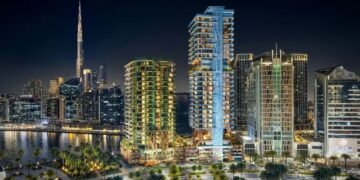
In 2026, communities benefiting from new metro connectivity, such as Dubai Creek Harbour, Festival City, and key parts of Dubai Silicon Oasis and International City, are expected to see renewed interest demand and price resilience.
Also read: Proptech Innovations Reshape Dubai Real Estate Investment Landscape
Prime villa districts remain structurally bulletproof, with ultra-prime locations such as Jumeirah Bay Island, Palm Jumeirah, Al Wasl, Dubai Hills Estate, and Mohammed Bin Rashid City continuing to show the highest resale velocity and lowest discount tolerance.
Walkable, lifestyle-first master communities attracting increased interest include City Walk, Central Park at City Walk, Bluewaters Island, and upcoming Meraas developments benefiting from integrated retail, design quality, and human-scale planning.
Meanwhile, Etihad Rail–influenced corridors emerge as long-term strategic plays, with Dubai South and the southern logistics corridor gaining relevance as inter-emirate connectivity and industrial demand mature.
“The winners in 2026 will not be defined by hype,” said Al Msaddi. “They will be defined by data, fundamentals, infrastructure, and brand credibility. Logic-based buying is back, and it will separate real assets from speculative noise.”
Implications for Indian Investors
This shift aligns with surging Indian interest in Dubai real estate, where buyers contributed significantly to 2025’s global inflows amid Golden Visa reforms and 6-10% yields outpacing Indian markets.
Knight Frank and CBRE reports highlight metro-linked and luxury assets as ideal for diversification, with low entry via off-plan plans suiting Liberalised Remittance Scheme limits. Logic-based criteria favor Tier-1 projects, offering residency and capital growth for families from India eyeing UAE’s stability.
Discover more from Invest Dubai Today - Dubai Realty Insights
Subscribe to get the latest posts sent to your email.