








Dubai, UAE — Dubai’s residential market is entering a phase where capital allocation is increasingly shaped by quality of planning rather than scale of supply. After several years of volume-driven growth led by off-plan launches and rapid absorption, investor behaviour is showing a clearer preference for districts that combine low-density layouts, open space, and long-term liveability with pricing resilience.
Transaction data suggests this shift is not cosmetic. According to the Dubai Land Department, the emirate attracted approximately 94,700 investors in the first half of 2025, a 26% increase year-on-year, contributing to over 91,000 residential transactions valued at AED 262.1 billion. Value growth outpaced volume growth, a pattern increasingly associated with selective capital deployment rather than broad-based speculation.
Recent analysis by developer Amaal points to a concentration of high-value transactions (above AED 10 million) in neighbourhoods characterised by green infrastructure, walkability, and controlled density. Rather than forming a lifestyle trend, these districts are emerging as pricing anchors in a market recalibrating around durability and end-user depth.
Meydan (Nad Al Sheba): Low-Density Off-Plan as a Pricing Hedge
Meydan’s appeal lies in its hybrid positioning—close to Downtown Dubai yet insulated from its vertical density. Capital inflows here are increasingly tied to low-rise formats, master-planned streets, and large green corridors that support long-term owner occupancy.
Also read: Dubai vs India: How Regulatory Environments Compare for Real Estate Investors
Market data from the second half of 2025 shows average apartment prices in Meydan rising to around AED 1,543 per sq ft, reinforcing investor confidence despite a broader expansion in supply elsewhere. With more than 70% of transactions occurring off-plan, buyers appear to be using district planning quality as a hedge against future price compression.
Mohammed Bin Rashid City: Family Capital and Long-Hold Demand
MBR City is serving a distinct role in Dubai’s market: absorbing family-led and long-hold capital seeking proximity to the urban core without the trade-offs of congestion. Its mix of villas, townhouses, and landscaped public spaces has translated into sustained participation in high-value residential deals through 2025.
Transaction reports from Q3 2025 show MBR City consistently featuring among top districts for large-format home sales. This pattern suggests that wellness-oriented master planning is now being priced in as a structural premium, particularly among buyers prioritising permanence over liquidity.
Dubai Hills Estate: Rental Stability Meets Green Infrastructure
Dubai Hills Estate represents the convergence of wellness-led planning and leasing depth. Its central park, golf course, and integrated amenities have created a self-contained residential ecosystem that continues to attract both end-users and yield-focused investors.
Also read: Dubai Enters 2026 With Price-Led Growth as Apartment Demand Concentrates
Occupancy data from the first half of 2025 indicates rental occupancy levels of approximately 86.5%, reflecting sustained demand even as rental markets elsewhere face affordability pressures. For investors, Dubai Hills is increasingly viewed as a stabilising asset class within a maturing market—less exposed to volatility, but also less reliant on rapid capital appreciation.
Palm Jumeirah: Scarcity as a Wellness Multiplier
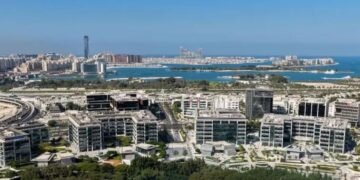
Palm Jumeirah’s role in the wellness-first narrative is less about green corridors and more about controlled scarcity combined with outdoor living. Waterfront access, pedestrian promenades, and private open space have reinforced its appeal among buyers seeking health-oriented lifestyles without sacrificing exclusivity.
Also read: Dubai Palm Jumeirah Land Price Record 2025 Sets New Benchmark
In Q2 2025, Palm Jumeirah accounted for the highest number of homes sold above $10 million in Dubai, underlining how wellness attributes can amplify pricing power when paired with supply constraints. Capital here remains decisively end-user and ultra-high-net-worth driven, limiting downside risk despite broader market expansion.
Emirates Hills: Privacy, Green Space, and Capital Preservation
Emirates Hills continues to function as Dubai’s benchmark for low-density, green villa living. Its appeal is rooted in privacy, large plot sizes, and adjacency to golf courses and parkland—attributes that align closely with global definitions of wellness and capital preservation.
Pricing data from H1 2025 shows ultra-luxury villas in Emirates Hills reaching around AED 4,929 per sq ft, placing the district among Dubai’s highest-value residential zones. Investor participation here is minimal; transactions are dominated by end-users and long-term holders, reinforcing its role as a defensive asset within the market cycle.
What This Signals for Dubai’s Market Structure
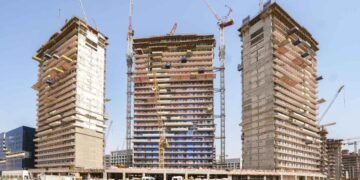
With more than 61,800 residential units under construction in 2025, Dubai’s next phase of growth will test not just absorption, but pricing differentiation. Districts that integrate green infrastructure, walkable design, and community depth are increasingly insulated from the risks associated with supply-led expansion.
For investors—particularly Indian and NRI buyers evaluating currency stability and long-hold strategies—these neighbourhoods represent a shift away from volume-led returns toward quality-driven pricing resilience. Entry timing, execution discipline, and service charge structures will matter more than headline yields.
Final Analysis
Dubai’s wellness-led districts are not outperforming because of lifestyle branding, but because they align with how capital behaves in a maturing market. As the emirate transitions from rapid expansion to selective consolidation, neighbourhoods that combine low density, open space, and end-user depth are emerging as anchors of long-term value.
For investors, the implication is clear: pricing durability is increasingly being shaped by planning quality rather than launch velocity. For end-users, especially families and overseas buyers, these districts offer a degree of certainty that is becoming rarer in high-supply cycles. The next chapter of Dubai’s residential market will be less about how much gets built—and more about where quality is structurally embedded.
Discover more from Invest Dubai Today - Dubai Realty Insights
Subscribe to get the latest posts sent to your email.