



















Dubai, UAE — In a market long defined by launch velocity and off-plan momentum, Dubai’s residential sector is beginning to reward a different currency: execution certainty.
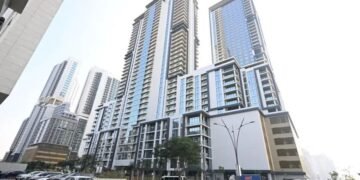
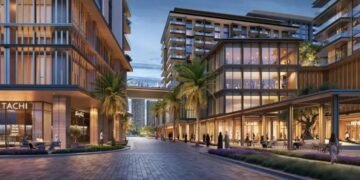
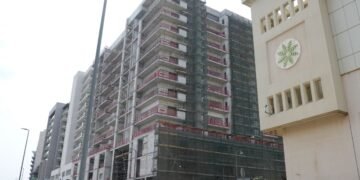
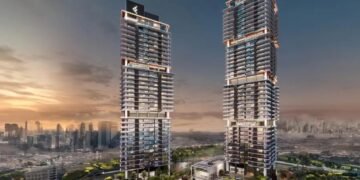
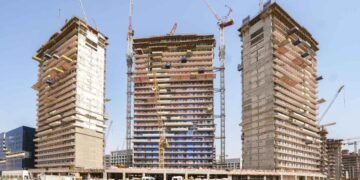
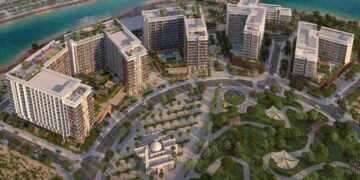
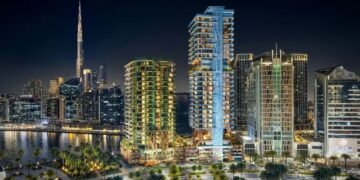
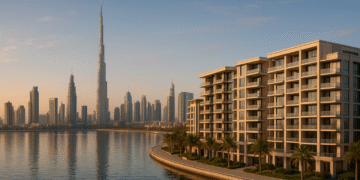
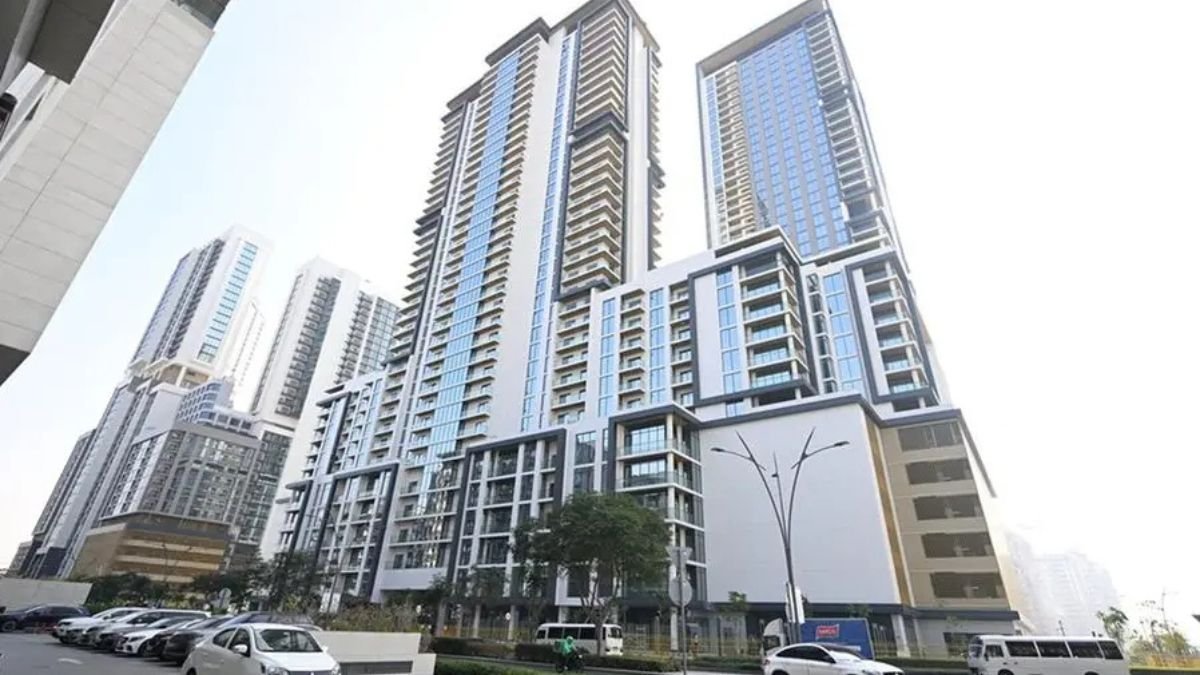
The latest signal comes from Sobha Realty, which has secured the Building Completion Certificate (BCC) for Sobha Crest Grande, a 985-unit residential development in Sobha Hartland. Customer handovers are expected to commence shortly, marking the project’s transition from construction to occupancy.
While the announcement, on the surface, marks another delivery milestone in Dubai’s active development cycle, its underlying significance lies in what it reveals about the market’s evolving priorities—from speculative participation to realised ownership.
From Pipeline to Possession
Crest Grande’s completion adds nearly a thousand units to Dubai’s ready residential inventory at a time when the market is navigating a delicate balance between sustained demand and rising supply pipelines.
Also read: Sobha–ADIB Tie-Up Lowers Early-Stage Friction in Dubai Off-Plan Financing
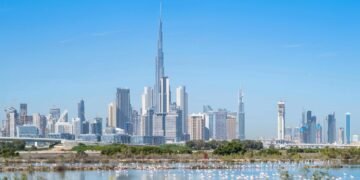
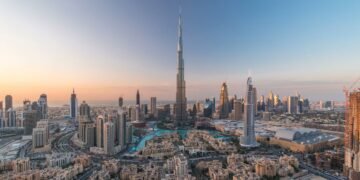
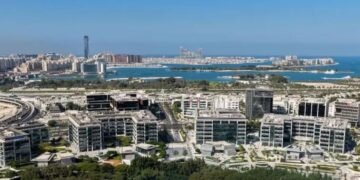
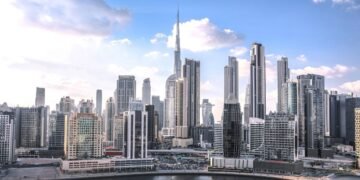
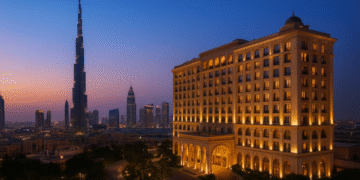
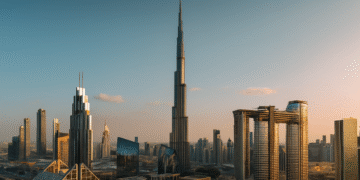
Located minutes from Burj Khalifa and Downtown Dubai, with connectivity to Dubai International Airport, the project sits within a micro-market that has increasingly attracted both end-users and long-term investors seeking proximity without the density pressures of core urban districts.
More importantly, the issuance of the BCC marks a structural shift in capital behaviour. As projects move from off-plan commitments to completed assets, investor focus begins to rotate—from price appreciation expectations to rental yields, occupancy rates, and community liveability.
This transition signals a broader market evolution: Dubai is not just being built—it is being occupied at scale.
Execution as Competitive Advantage
In the current cycle, characterised by elevated launch activity across developers, timely delivery is emerging as the primary differentiator.
Sobha Realty’s ability to complete Crest Grande in line with timelines committed to the Real Estate Regulatory Agency (RERA) underscores a growing divide in the developer landscape—between those that can execute with precision and those still reliant on fragmented construction ecosystems.
At the core of this capability is Sobha’s backward integration model, which brings key construction processes in-house. While often positioned as a quality control mechanism, in the current environment it functions more critically as a risk hedge against cost inflation, contractor delays, and supply chain disruptions.
For investors, this translates into reduced uncertainty—arguably the most valuable asset in a high-liquidity, high-launch market.
As Francis Alfred, Managing Director of Sobha Realty, noted, the significance of the BCC extends beyond construction completion to reinforcing buyer trust in delivery commitments. That trust, in today’s market, is increasingly tied to demonstrated execution rather than promised vision.
The Standardisation of “Premium”
Crest Grande also reflects a subtle but important shift in how premium residential offerings are being defined in Dubai.
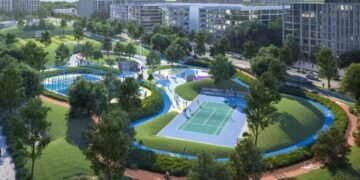
Features such as waterfront views, integrated amenities, and central connectivity—once considered differentiators—are rapidly becoming baseline expectations across mid-to-premium developments. The presence of indoor and outdoor fitness facilities, pools, retail integration, and landscaped environments is now standard across a wide spectrum of projects.
As a result, the locus of differentiation is moving away from physical specifications toward intangibles such as delivery credibility, community planning, and long-term asset performance.
Also read: Sobha Sanctuary Adds Scale to Dubai Off-Plan Villa Supply
In this context, projects that can demonstrate both location advantage and execution discipline are likely to command stronger end-user confidence and more stable post-handover value trajectories.
Regulatory Adherence as Market Signal
The explicit emphasis on adherence to RERA timelines in Crest Grande’s delivery is another indicator of shifting market dynamics.
Regulatory compliance in Dubai has evolved beyond a baseline requirement to become a market signal of credibility, particularly for international investors who rely on institutional frameworks to mitigate risk.
As cross-border capital continues to play a significant role in Dubai’s property market, developers that consistently align with regulatory timelines and transparency standards are likely to benefit from stronger investor preference and faster absorption rates.
A Market Repricing Risk—and Trust
The completion of Crest Grande comes at a time when Dubai’s residential sector is showing signs of increasing selectivity. Transaction volumes have moderated in certain segments, even as values remain resilient—suggesting a market that is digesting supply rather than chasing momentum.
In such an environment, projects that reach completion on schedule contribute to stabilising market sentiment, reinforcing the perception of Dubai as a delivery-driven, investor-secure real estate market.
For homeowners, the transition is immediate and tangible—from anticipation to possession. For the market, however, the implications are broader.
Crest Grande’s completion is not merely a handover event. It is part of a larger recalibration—one where trust, timelines, and tangible delivery are beginning to outweigh marketing narratives and launch scale.
The Road Ahead
As Dubai moves deeper into its current real estate cycle, the competitive hierarchy among developers is likely to be increasingly defined by who delivers, not just who launches.
In that context, Sobha Realty’s latest milestone positions it within a cohort of developers that are shaping the market’s next phase—where execution is not an operational detail, but a strategic advantage.
And as more projects transition from blueprint to built reality, the market’s centre of gravity will continue to shift—from promise to performance.
Discover more from Invest Dubai Today - Dubai Realty Insights
Subscribe to get the latest posts sent to your email.