





















Dubai, UAE — Dubai’s real estate market is entering a phase where the focus is shifting from launch velocity to absorption depth, particularly outside traditional business and residential cores. As office demand disperses beyond central districts and residential buyers weigh commute efficiency against resale liquidity, developers are increasingly testing whether decentralised formats can support both uses simultaneously.
Against this backdrop, Damac Properties has added new inventory to Dubai mixed-use office and residential supply in Dubailand, a corridor that continues to attract residential demand but remains less proven for sustained office leasing compared to established commercial zones.
What Damac Has Launched
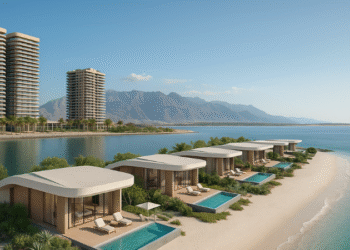
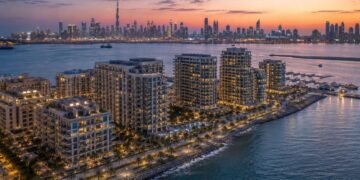
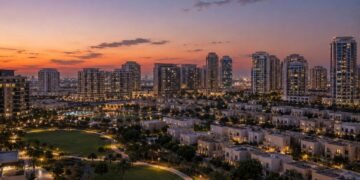
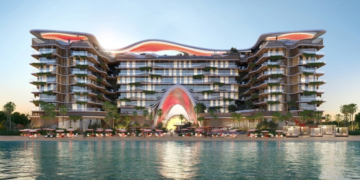
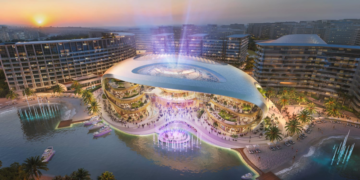
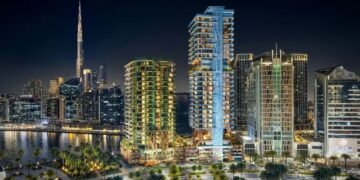
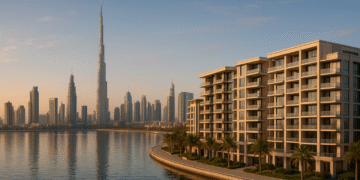
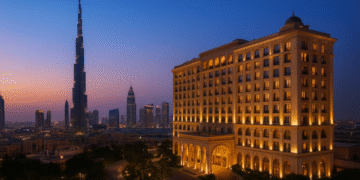
Damac Properties has launched Piazza Roma offices and Valencia apartments within its Lagoons District masterplan, a mixed-use development located in Dubailand. The scheme combines office space and residential units within a mall-anchored district that is positioned as a live-work environment.
Also read: Mashriq Elite Breaks Ground on Floarea Oasis in Dubailand
According to the developer, the district is planned around decentralised cores, with residential, office, retail, wellness and community amenities placed within walking distance to reduce daily travel time. The project forms part of a broader multi-use development anchored by Damac Mall.
Connectivity is a central part of the positioning, with the developer citing travel times of under 30 minutes to destinations including Global Village, Trump International Golf Club and Al Maktoum International Airport.
Dubailand’s Role in Dubai’s Mixed-Use Supply Pipeline
Dubailand has emerged as one of Dubai’s most active residential development zones, driven by comparatively accessible pricing and large-scale masterplanning. However, office supply in the area remains limited, with most Grade-A commercial stock concentrated in districts such as DIFC, Downtown Dubai and Business Bay.
By introducing new offices alongside apartments, Damac is expanding Dubai mixed-use office and residential supply in a location where residential demand is established, but commercial leasing depth is still evolving. The model reflects a broader planning trend in Dubai that prioritises proximity-led living and decentralisation, particularly as population growth places pressure on transport infrastructure.
Market data tracked by platforms such as DXB Interact and CBRE shows that while office occupancy has improved citywide, demand remains uneven outside core commercial clusters, making absorption a key variable for projects of this nature.
Investor Lens: Residential Versus Office Absorption
For residential investors, mixed-use districts can offer advantages such as on-site retail, amenities and walkability, which may support rental demand over time. However, pricing and resale liquidity in non-core locations continue to depend heavily on infrastructure maturity and competing supply.
Also read: Meraki Launches The Haven III Apartments in Dubailand’s Majan
Office investors face a more nuanced equation. While decentralised office formats may appeal to SMEs and flexible workspace operators, long-term leasing stability outside established business districts is less predictable. The success of Piazza Roma offices will likely hinge on tenant mix, pricing discipline and the pace at which Dubailand develops into a genuine employment hub rather than a predominantly residential zone.
Speaking on the launch, Amira Sajwani, Managing Director of Damac Properties, said the district aims to bring together residential and commercial uses in a more time-efficient format, adding: “We’re bringing together two powerful ideas of waterfront wellbeing and a high-energy urban district, so residents and professionals can spend less time commuting and more time living.”
Experience-Led Planning as a Leasing Strategy
The district incorporates experience-oriented public spaces designed to drive footfall and day-to-night activity. Damac said these include digitally enabled walkways, retail concepts designed to rotate frequently, and performance spaces intended to activate the public realm.
Sajwani said the planning approach was centred on creating a human-scale environment supported by integrated retail and community spaces, noting that the objective was to align sustainability-led planning with practical daily use rather than isolated destinations.
From an investor perspective, such activation strategies can support commercial leasing and residential desirability, but they also introduce operational complexity and long-term maintenance considerations that can affect service charges and net returns.
Risk or Constraint: Office Leasing Outside Core Districts
The primary uncertainty surrounding this addition to Dubai mixed-use office and residential supply lies in office absorption. While residential demand in Dubailand has proven resilient, office leasing outside established hubs remains sensitive to pricing and economic cycles.
If office occupancy lags residential delivery, mixed-use developments can face imbalances that affect retail performance and community vibrancy. Investors will therefore need to monitor leasing velocity and tenant composition closely once the district becomes operational.
What to Watch Next
Market observers are likely to track early office leasing activity at Piazza Roma, residential sales or leasing performance at Valencia, and how footfall develops around the mall-anchored core. Broader indicators such as SME office demand, infrastructure upgrades in Dubailand and competing mixed-use launches will also shape outcomes.
For investors, Damac’s move adds another data point to Dubai’s evolving decentralisation strategy, where mixed-use developments aim to balance residential demand with emerging office needs outside core districts. End-users may benefit from proximity-driven planning, but long-term value will depend on execution and leasing depth. For Indian and NRI buyers in particular, the project highlights the importance of differentiating between residential demand certainty and office absorption risk when evaluating mixed-use assets in non-core locations.
Discover more from Invest Dubai Today - Dubai Realty Insights
Subscribe to get the latest posts sent to your email.