












Dubai, UAE — As Dubai’s residential pipeline expands toward 2026–2028, investor attention is shifting away from launch momentum toward execution certainty in mid-market freehold housing, where rental depth matters more than short-term price discovery. In that context, international developer BCD Global’s decision to break ground—rather than merely announce—its first Dubai project in Warsan offers a signal about where disciplined, rental-led supply is taking shape.
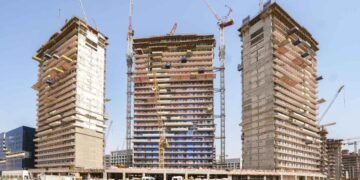
Groundbreaking in Warsan
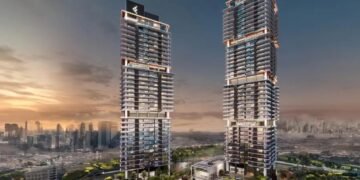
BCD Global has begun construction on its first Dubai residential project in the Warsan district, targeting mid-market buyers and long-term investors with one- and two-bedroom freehold apartments. The project marks the company’s formal entry into Dubai’s residential development market and forms part of a wider pipeline focused on execution-led delivery and regulatory compliance.
The developer said it is targeting revenue of AED 300 million in Q1 2026 from its UAE projects, starting with the Warsan development.
Why Construction Timing Matters
Breaking ground, rather than announcing a future launch, places the project firmly in the execution phase—an increasingly important distinction as Dubai’s off-plan-heavy market matures. Dr Angad Singh Bedi, Chairman of BCD Global, framed the milestone as a point of accountability rather than promotion, noting that durability in design, compliance, and long-term value creation is central to the company’s approach.
Also read: Dubai Emerges as Global Base for Real Estate Platform Expansion
The developer operates a zero-debt, vertically integrated platform and has delivered more than 155 million square feet of real estate across over 300 developments in seven countries over seven decades, according to the company.
Warsan in the 2026–2028 Supply Cycle
Dubai’s residential market has sustained strong momentum into 2025, supported by population growth, investor inflows, and a widening supply pipeline. Market estimates point to nearly 300,000 new homes under development across the UAE by 2028, with rental rates expected to remain resilient into 2026 despite rising completions.
Within that landscape, Dubai mid-market freehold housing zones such as Warsan play a different role from prime or waterfront districts. Demand here is typically rental-led, supported by workforce housing needs, accessibility, and price sensitivity rather than speculative capital appreciation. As a result, absorption tends to be steadier but more dependent on leasing depth at handover.
How Investors will Underwrite This
From an investor standpoint, the Warsan project aligns with strategies prioritising yield visibility and regulatory clarity over near-term price acceleration. Amit Puri, Chief Executive Officer of BCD Global, described Dubai as one of the few global cities still offering a combination of yield, transparency, and long-term growth, adding that the project has been structured for sustained rental demand rather than short-term speculation.
Also read: Mashriq Elite Enters Delivery Cycle as Mid-Market Supply Builds
For Indian and NRI investors in particular, this positioning shifts the decision framework away from headline appreciation and toward execution timelines, vacancy risk, and service-charge sustainability—factors that increasingly determine net returns in mid-market segments.
Compliance and Delivery Discipline
BCD Global said the project will be delivered in full compliance with Dubai Land Department and Real Estate Regulatory Agency (RERA) requirements. While regulatory alignment reduces structural risk, investors will still track construction milestones closely, especially as multiple mid-market developments across outer districts approach handover in the same cycle.
Rental and Pricing Sensitivity
The key constraint lies in pricing and rental ceilings typical of mid-market corridors such as Warsan. As additional supply delivers across adjacent areas, leasing competition may intensify, placing pressure on achievable rents if employment growth or household formation slows. Execution certainty reduces risk, but does not eliminate sensitivity to broader rental-market conditions at handover.
Investors and observers will monitor construction progress, escrow disclosures, and early leasing indicators as the project advances. More broadly, whether additional international developers commit capital to similar mid-market freehold zones will offer insight into how the next phase of Dubai’s residential cycle is being priced and underwritten.
BCD Global’s groundbreaking in Warsan reflects a quieter but more consequential shift in Dubai’s residential market: capital is moving toward execution-first, rental-oriented mid-market freehold housing rather than announcement-led launches. For investors, the development reinforces the importance of delivery discipline and leasing depth in the 2026–2028 window. For end-users, it expands choice in accessible districts where affordability and stability matter more than prestige. For Indian and NRI buyers, the story is less about timing the market and more about backing projects where construction progress, compliance, and long-term occupancy are clearly aligned.
Discover more from Invest Dubai Today - Dubai Realty Insights
Subscribe to get the latest posts sent to your email.