

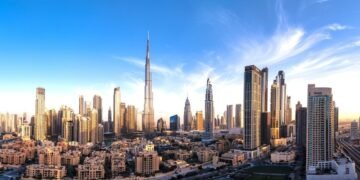

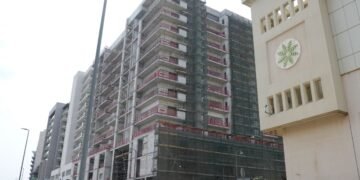



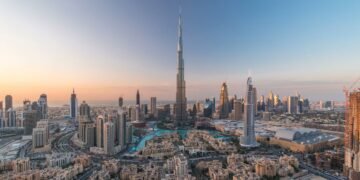


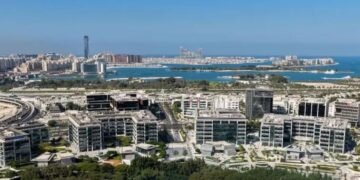












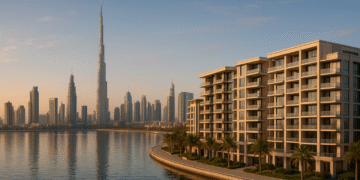

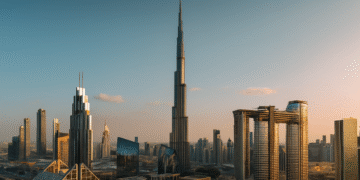


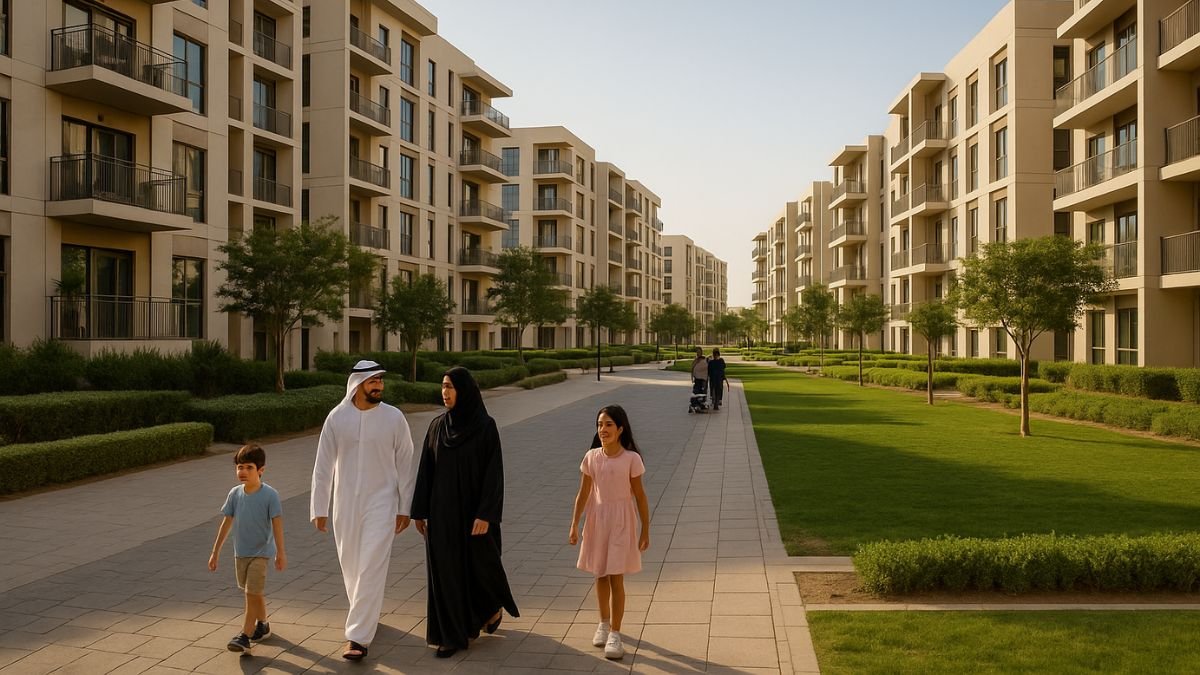
Dubai, UAE — Investors and analysts say Dubai South is increasingly attractive as an entry point for residential investors, driven by comparative affordability, new handovers and a deep development pipeline — although supply risks remain a key caveat.
The Dubai Land Department recorded 125,538 real-estate transactions worth AED 431 billion in H1 2025, a year-on-year increase in both transaction volume and value, underscoring an active market environment.
Within that wider surge, Dubai South residential investment trends show notable activity in the southern growth corridor. Portal Bayut, which publishes DLD-sourced summaries, reports approximately 7,296 sales transactions across all residential property types in Dubai South over the last 12 months, with a total value of about AED 14.47 billion and an average price near AED 1,433 per sq ft.
Price Advantage and Investor Appeal
Dubai South’s average per-sq-ft pricing remains substantially lower than many central Dubai neighbourhoods, offering a lower entry barrier for regional buyers, including many from India. For comparison, Bayut’s citywide metrics show prime central districts routinely record price points several times higher per sq ft.
Also read: Emaar Launches Terra Gardens At Expo Living In Dubai South
Knight Frank’s quarterly reporting further confirms that off-plan activity and new-launch momentum continue to shape Dubai’s broader market dynamics, with record transaction volumes recorded in 2025. Knight Frank highlights that off-plan sales dominated recent months and that citywide price growth remains elevated.
“The market continues to be dominated by off-plan sales, which accounted for 69% of all transactions,” Knight Frank’s Q1 2025 review observed, underlining the central role of developer launches in current activity.
Supply, Deliveries and Timing Risk
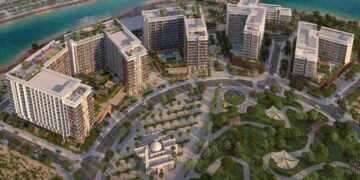
Dubai South is a master-planned district designed around the logistics and aviation ecosystem near Al Maktoum International Airport and Expo City — a scale that implies large volumes of residential product that will be delivered over coming years. The district’s masterplan remains a long-term anchor for infrastructure and employment-led demand.
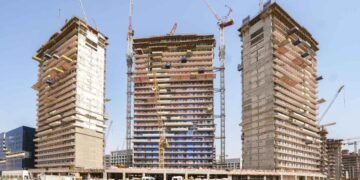
Research houses caution that the delivery pipeline across Dubai’s outer corridors could press on near-term absorption. Ratings agencies and major consultancies have flagged the potential for price moderation if sizeable deliveries in 2025–2026 outstrip demand. Fitch and other analysts have highlighted the scale of incoming supply as a near-term risk.
Rental Market and Yields
Bayut’s rental snapshot for H1 2025 indicates rental growth in Dubai South has been more muted than in central locations, with three-bed and four-bed rents posting moderate increases.
Also read: Samana Developers Launches Samana Hills South 3 in Dubai South
Market analysis provides quantified yield context: their analysis shows yields in outer communities can remain attractive, and the firm has warned that as supply ramps up, close attention is needed to monitor pricing dynamics. ValuStrat’s Q2 and regular market commentary also notes strong capital value growth citywide while urging caution on supply timing.
“As supply ramps up in the second half of the year, close attention will be needed to monitor its impact on pricing dynamics. Nonetheless, the outlook remains positive across residential, office and industrial sectors,” said Haider Tuaima, Managing Director and Head of Real Estate Research at ValuStrat.
What This Means for Indian Investors
Indian buyers remain among the most active international nationalities purchasing Dubai property, according to DLD disclosures and market reports. The relative affordability of Dubai South — combined with developer payment plans, proximity to Expo City and airport infrastructure, and access to the wider rental market — appeals to mid-ticket investors from India seeking either yield or a multi-year capital-appreciation play. Exchange-rate movements are an additional factor: rupee-dirham moves can make certain purchases more or less attractive in rupee terms.
Analysts recommend Indian investors factor in holding periods of five years or more to smooth potential short-term volatility from new supply. Knight Frank and ValuStrat both stress that while demand fundamentals are strong, timing and project selection remain crucial.
Balanced Outlook
Industry research and transaction records present a picture of an evolving southern corridor: affordability and infrastructure make Dubai South a logical diversification play for many investors, while the delivery pipeline and concentration of off-plan launches introduce short-term prudence into buying strategies.
With transparent transactional data available via DLD and developer disclosures, buyers — including Indians targeting Dubai — can conduct verifiable due diligence. The consensus among independent research firms is that Dubai South’s long-term fundamentals look solid, but near-term returns will depend on supply absorption and the macroeconomic backdrop.
Discover more from Invest Dubai Today - Dubai Realty Insights
Subscribe to get the latest posts sent to your email.