





























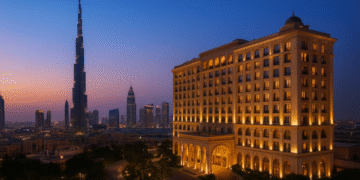



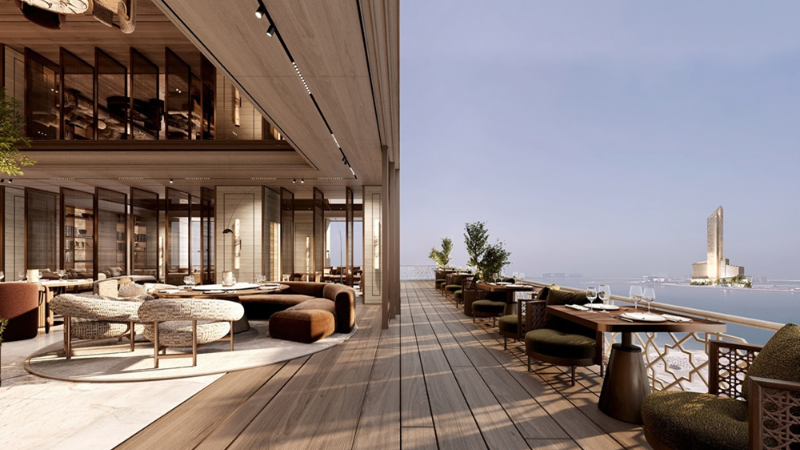
Dubai, UAE — Dubai’s branded residential market is expanding beyond established prime districts as developers seek to anchor long-term demand with globally recognised hospitality names. The signing of Waldorf Astoria hotel and residences on Dubai Islands reflects this shift, positioning branding as a tool for pricing discipline and buyer confidence as new coastal supply enters the pipeline.
Hilton–AVENEW Agreement Details
Dubai-based AVENEW Development has signed an agreement with Hilton to develop Waldorf Astoria Dubai Islands and Waldorf Astoria Residences Dubai Islands, introducing the luxury hospitality brand to the emerging island destination.
According to the developer, the hotel component will include 150 guest rooms and suites, alongside multiple dining venues and leisure facilities. The residential element will comprise 120 branded residences, offered as fully furnished apartments with access to hotel services and amenities.
The project marks AVENEW’s second branded residential development on Dubai Islands and its sixth overall within the master-planned waterfront community.
Why Dubai Islands Matters at This Stage
The move comes as Dubai Islands branded residences gain prominence in a market where branding increasingly serves as a differentiator amid rising off-plan supply. Rather than competing solely on price or payment plans, developers are leaning on hospitality partnerships to reinforce asset positioning, resale defensibility, and long-term desirability.
Also read: Waldorf Astoria Unveils AED 130Mn Sky Palace in Ras Al Khaimah
For Dubai Islands in particular, branded projects are becoming a signalling mechanism: they indicate developer conviction in the destination’s long-term relevance rather than near-term speculative demand.
Branded Residences as a Market Anchor
Dubai has emerged as one of the world’s most active markets for branded residences, supported by international demand, regulatory clarity, and an established hospitality ecosystem. As the segment has scaled, branding has evolved from a niche premium feature into a mainstream strategy used to stabilise absorption in large master-planned locations.
Within this context, Dubai Islands branded residences represent a second-phase growth story. Unlike mature coastal districts, the area is still in an infrastructure and identity-building phase, making brand association particularly relevant for early projects seeking to attract long-term end users and globally mobile buyers.
AVENEW’s Portfolio Strategy
AVENEW Development framed the agreement as a deliberate portfolio-scaling decision rather than a one-off collaboration. Rasha Hassan, Managing Partner of AVENEW Development, said the partnership reflects a shift in buyer expectations toward predictability and service-backed quality rather than purely architectural appeal.
She noted that aligning with an established hospitality brand supports asset durability and reduces uncertainty for buyers assessing long holding periods, especially in emerging waterfront locations.
By choosing Waldorf Astoria, AVENEW is aligning its Dubai Islands exposure with a brand positioned at the upper end of the hospitality-residential spectrum, reinforcing the project’s long-term positioning rather than short-term sales velocity.
Hilton’s Regional Branded Push
From Hilton’s perspective, the signing extends its regional luxury footprint while strengthening its branded residential platform. Carlos Khneisser, Chief Development Officer, MEA at Hilton, said the partnership reflects continued momentum for branded residences across the region and the group’s confidence in Dubai Islands as a future hospitality and residential node.
Also read: Waldorf Astoria Debuts First Branded Residences in Ras Al Khaimah
The integration of hotel operations with residential ownership, he added, allows both guests and homeowners to access consistent service standards, a key consideration for buyers evaluating branded assets as lifestyle holdings rather than purely financial instruments.
How Investors May Read This
For investors, Dubai Islands branded residences introduce a different risk-return profile compared to unbranded off-plan supply. Branding does not eliminate execution or delivery risk, but it can influence buyer behaviour at resale, particularly in periods when supply visibility increases across the broader market.
Indian and NRI buyers, who often evaluate Dubai real estate through a long-term wealth preservation lens, tend to prioritise recognisable brands, service predictability, and exit liquidity over near-term yield assumptions. In that context, branded residences may function as capital-stability assets rather than income-optimised plays.
Execution and Supply Considerations
The primary constraint remains timing and execution. As with any off-plan branded development, delivery schedules, service charge structures, and operational clarity will ultimately determine how the project performs post-handover.
In addition, as more Dubai Islands branded residences are announced, differentiation within the branded segment itself will matter. Brand saturation could narrow pricing spreads between projects, placing greater emphasis on build quality, management, and long-term maintenance standards.
What Comes Next for Dubai Islands
Market participants will track construction timelines, formal launch pricing, and early booking patterns to gauge how buyers are valuing branded exposure on Dubai Islands relative to established coastal districts.
More broadly, the pace at which branded residences continue to cluster within the destination will offer insight into whether Dubai Islands is evolving into a sustained luxury residential ecosystem or remains a selectively branded waterfront play.
Discover more from Invest Dubai Today - Dubai Realty Insights
Subscribe to get the latest posts sent to your email.